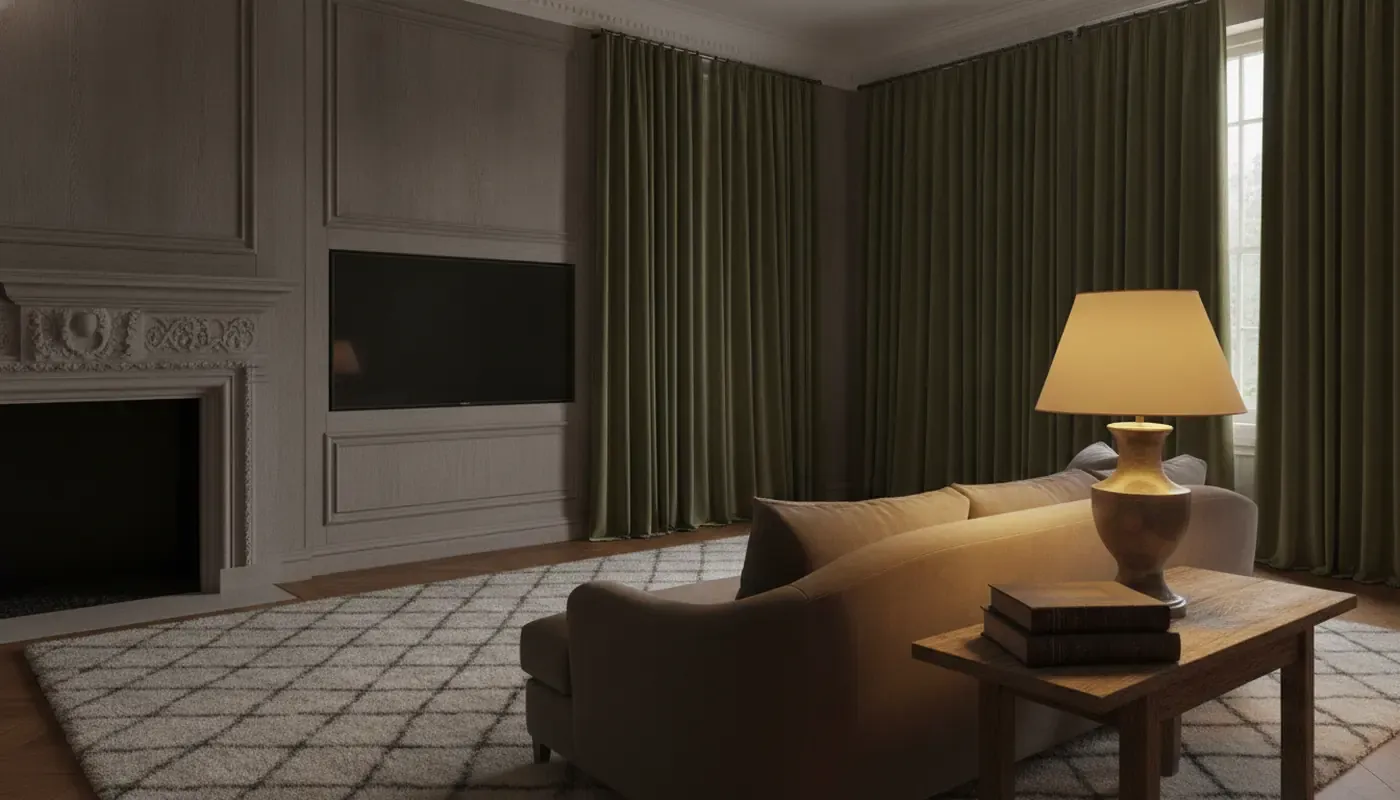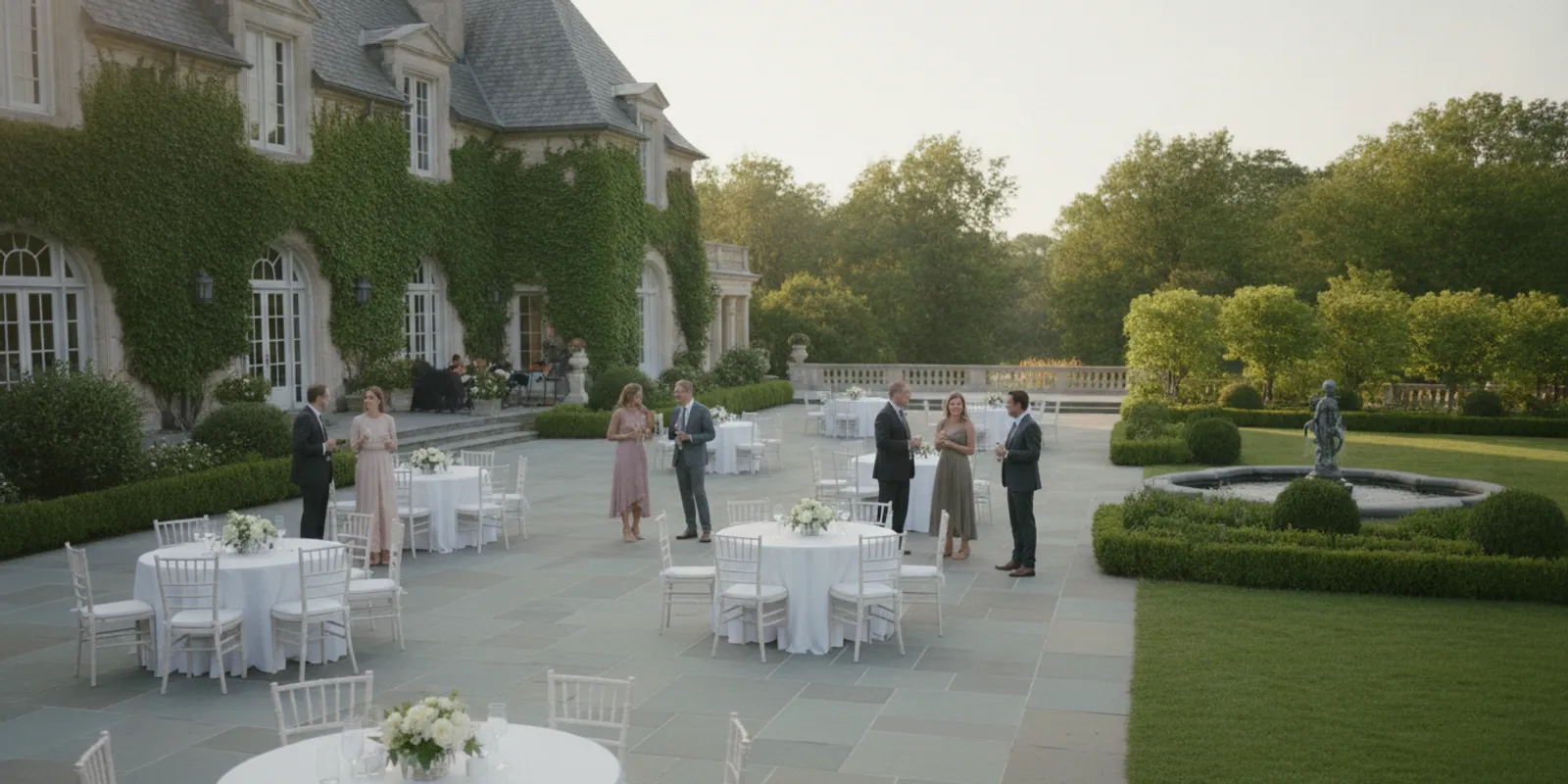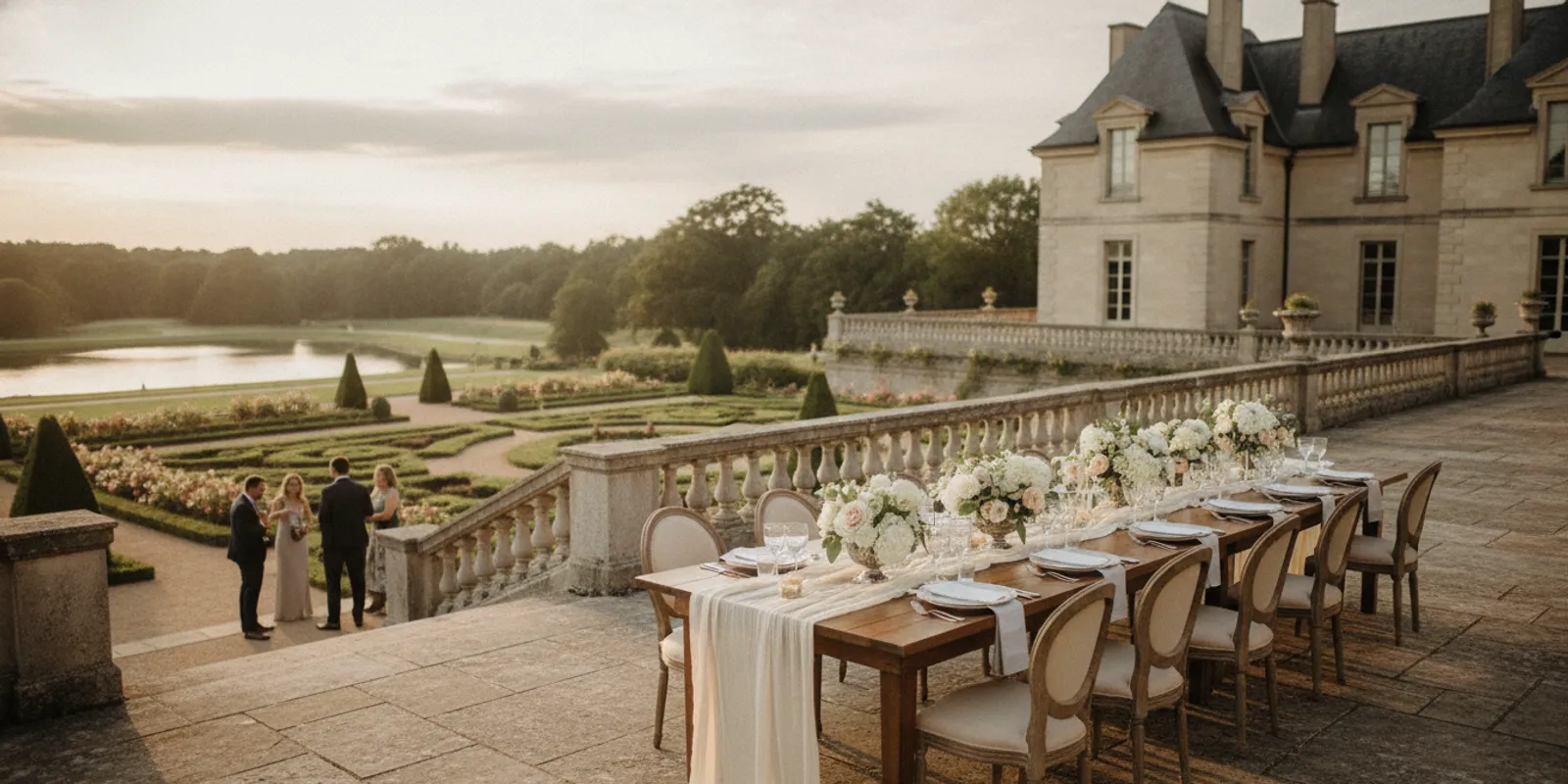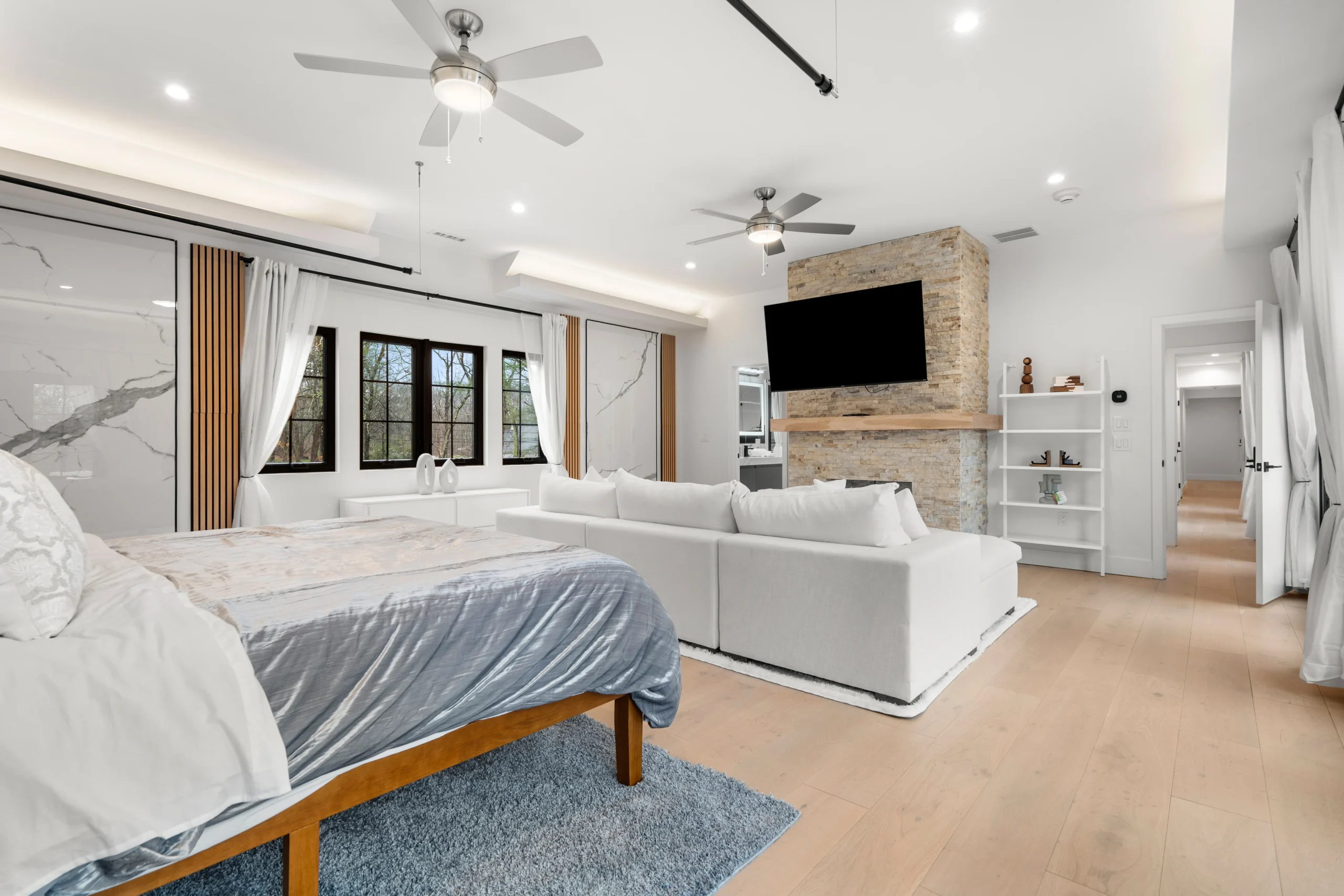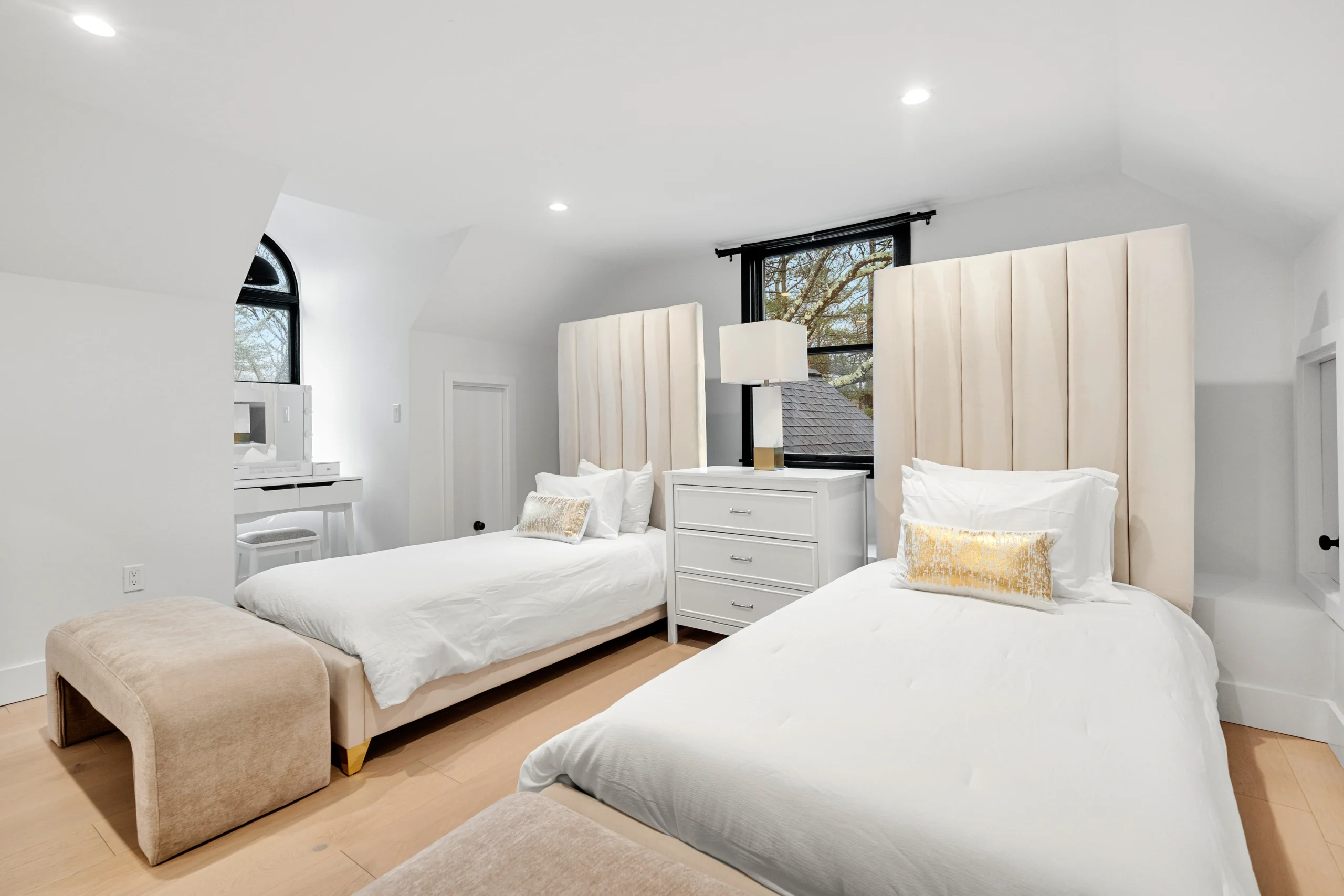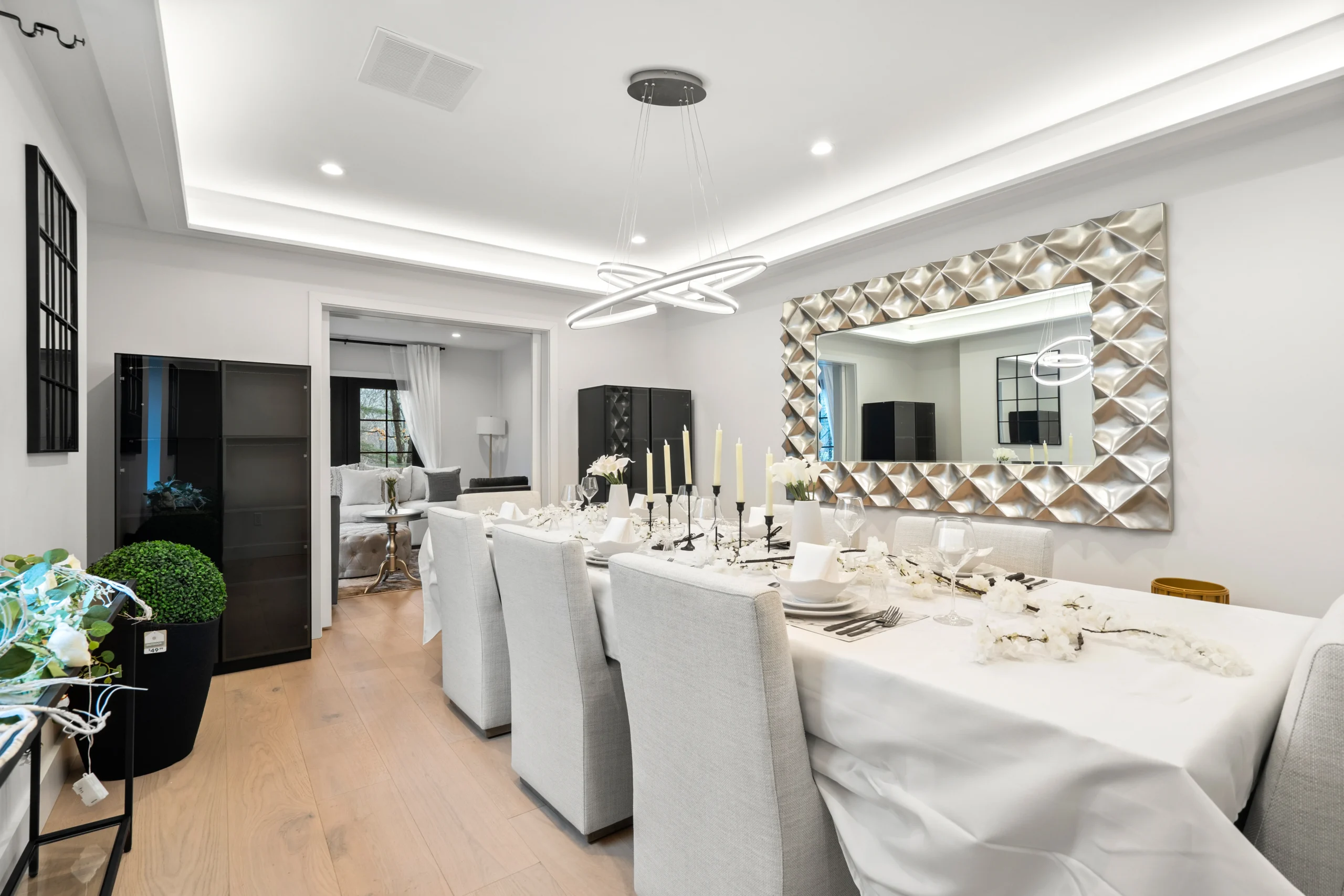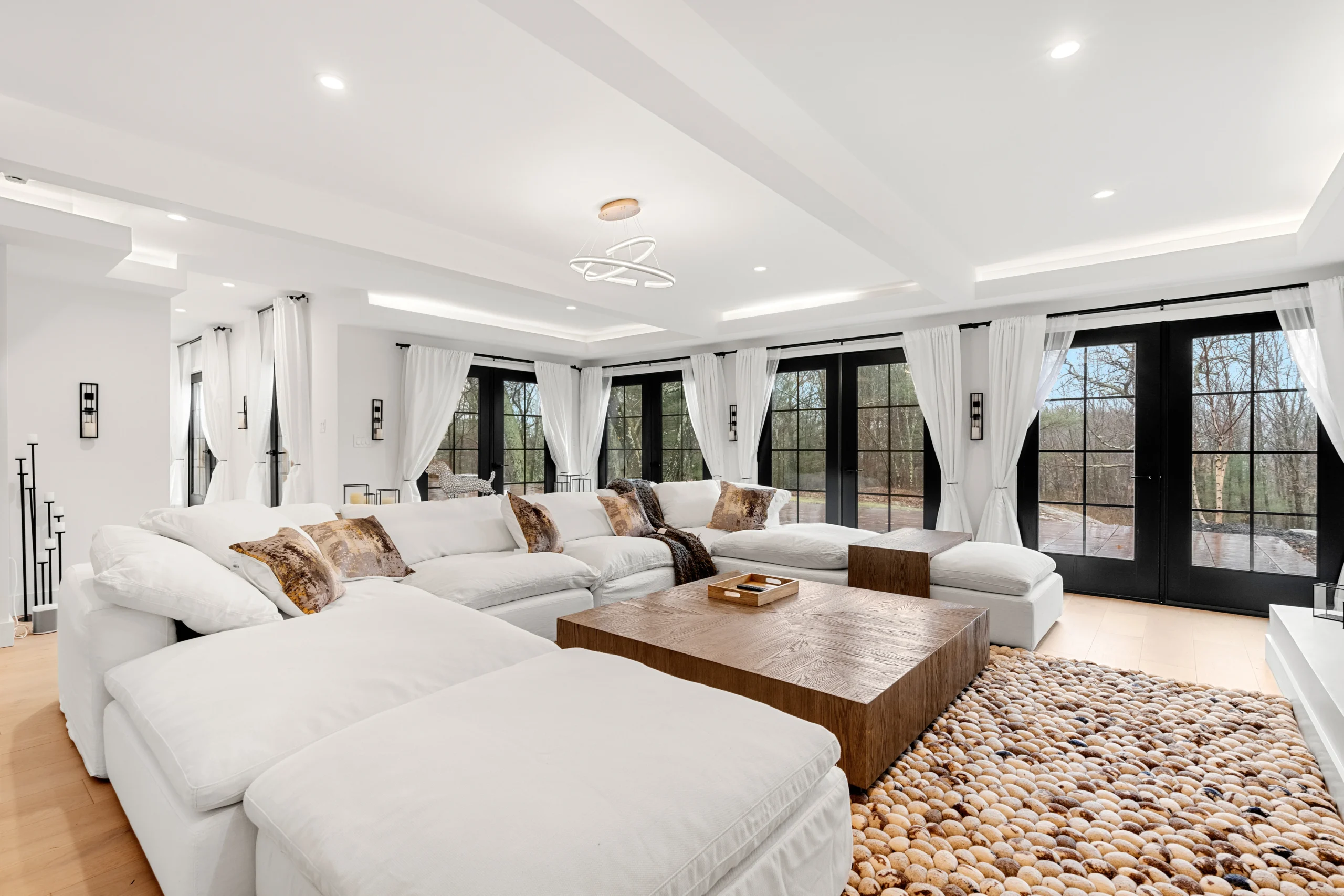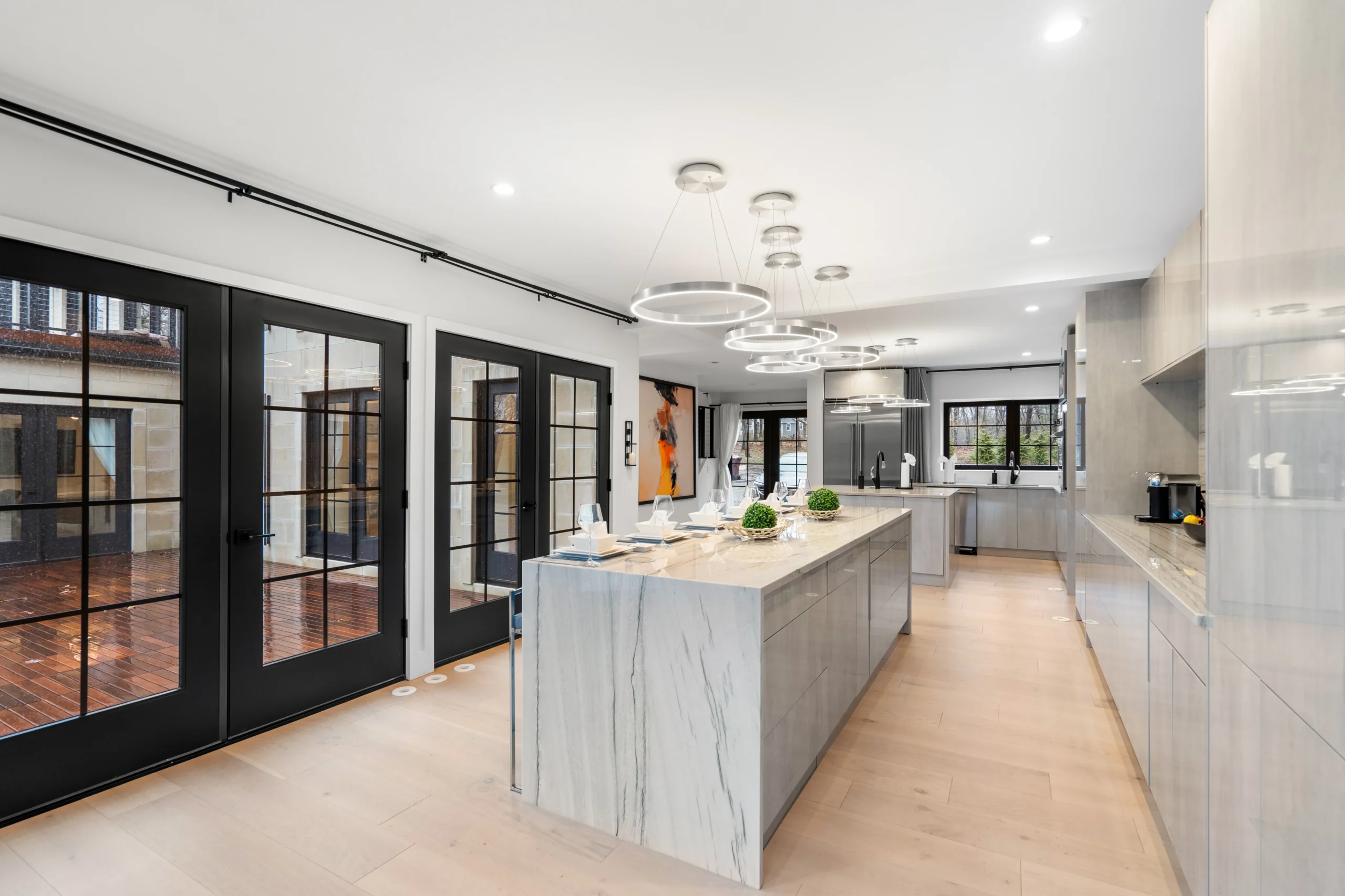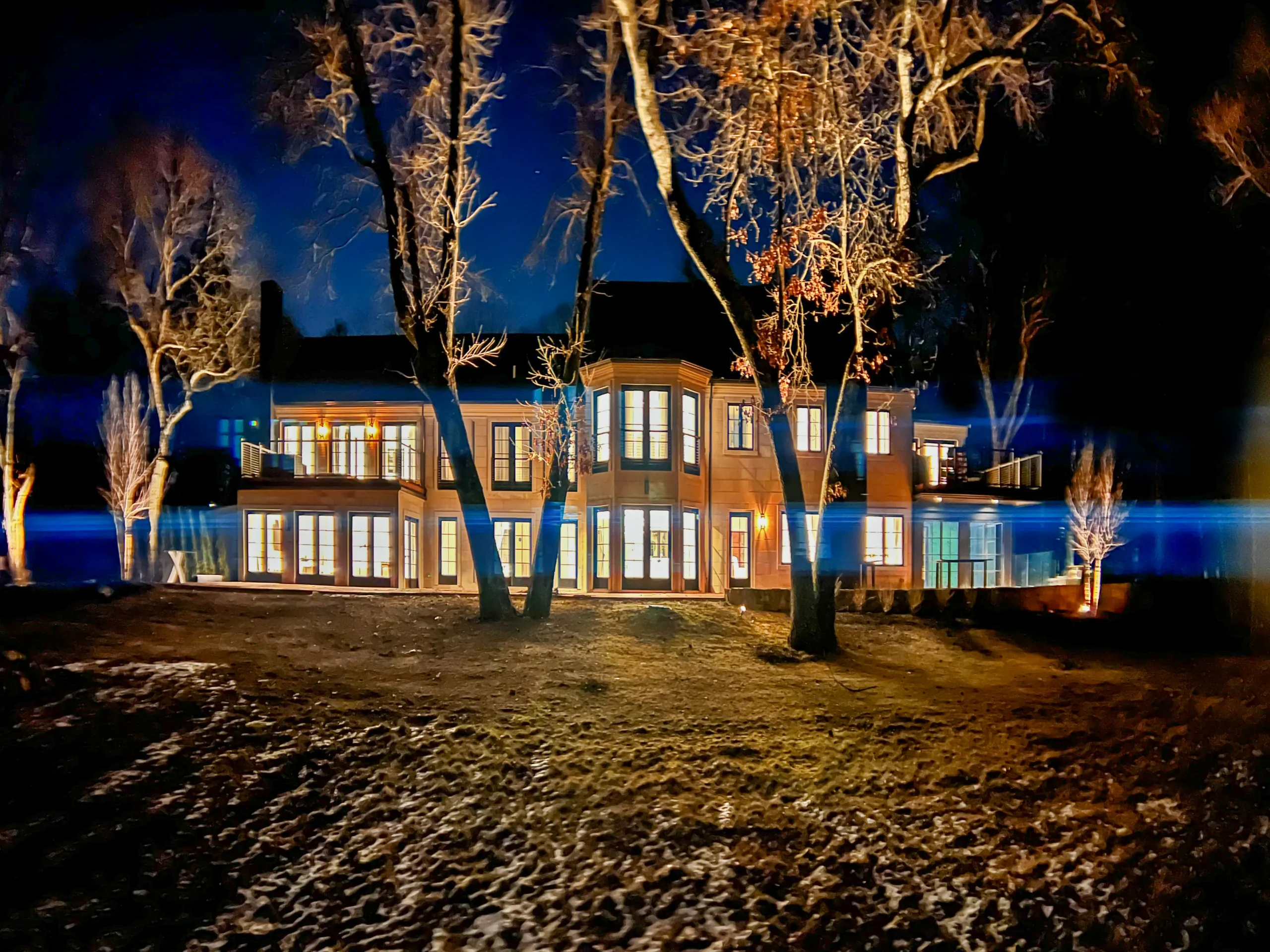
An executive retreat venue near Boston should do more than remove a leadership team from the office. It should create the conditions for confidential discussion, disciplined decisions, candid alignment, and accountable execution. The Charles Chateau is an 8,000-square-foot French Chateau-inspired private estate on 11 private acres in Dedham, Massachusetts, approximately 20 minutes from downtown Boston. Its estate-scale privacy and concierge-led approach give senior leaders a composed setting in which to address consequential work without the exposure. Interruptions, or rigid rhythms of a conventional meeting property.
Request Availability for a private executive retreat.
A leadership retreat earns its place on the calendar only when it changes what happens after the calendar returns to normal. The setting matters because environment shapes behavior. A boardroom at headquarters can preserve status patterns, habitual arguments, and the constant pull of operating demands. A public conference property can introduce shared corridors, neighboring events, fixed service windows, and uncertainty about who may overhear a conversation. A private estate creates a clearer boundary around the work. It gives a leadership team permission to slow down enough to examine assumptions while retaining enough structure to reach decisions.
This guide is for chiefs of staff, executive assistants, strategy leaders, board liaisons, and senior event planners responsible for a high-stakes offsite. It explains how to evaluate privacy, agenda design, governance, stakeholder alignment, and follow-through, as well as how to determine whether a private estate near Boston fits the group. It also clarifies the distinctive model of The Charles Chateau private estate: reservations are extended to active members and invited guests, while prospective guests may request consideration for membership through the concierge team.
Why does a private estate change an executive retreat?
A private estate changes an executive retreat by replacing shared, transactional meeting space with an exclusive environment that supports candor, continuity, and control. Leaders can hold sensitive discussions, move naturally between plenary and smaller conversations, and maintain momentum without adapting the work to another group’s schedule.
Senior teams rarely struggle because they lack information. They struggle because information is interpreted through competing incentives, unspoken concerns, and different views of risk. A productive retreat makes those differences discussable. The physical setting should lower social friction without lowering standards. In a private estate, a formal strategy session can move into a smaller conversation between two executives. Then return to the full group after the issue has been clarified. That sequence is difficult in a public venue where every room change, refreshment window, and breakout request becomes an operational event.
Confidentiality supports candor
Executive retreat topics often include succession, capital allocation, organizational design, acquisition scenarios, leadership performance, strategic exits, or changes not yet ready for broad communication. Confidentiality is therefore not a hospitality preference. It is a governance requirement. Planners should consider both information security and the behavioral confidence created by a genuinely private environment. When participants know the group is not sharing corridors, dining areas, or adjacent meeting rooms, they can speak with greater precision and less self-censorship.
Privacy does not eliminate the need for internal protocols. It makes those protocols easier to enforce. The retreat owner can define who attends each session, which materials may leave the room, when devices should be put away, and how conclusions will be recorded. A clear confidentiality plan should address printed documents, whiteboards, remote participants, photography, and the treatment of notes after departure. The estate provides a discreet physical perimeter; the leadership team supplies the decision discipline within it.
- Control attendance: distinguish core decision-makers, subject-matter contributors, facilitators, and guests.
- Control information: label sensitive materials and establish collection, storage, and destruction procedures.
- Control technology: decide when devices are useful, when they are distracting, and when they introduce avoidable risk.
- Control communication: agree in advance on what can be shared, with whom, and at what point after the retreat.
Takeaway: The most effective confidential setting is one in which privacy, participant rules, and communication governance reinforce one another.
Continuity improves decision quality
Important decisions rarely emerge from a single presentation. They develop through a sequence: establish the facts, surface assumptions, test alternatives, clarify tradeoffs, determine the decision owner, and commit to action. A private estate helps preserve that sequence because the group remains together across formal and informal moments. A concern raised during a morning session can be explored during a walk, refined over a meal, and resolved in the next working block without losing context.
This continuity is particularly valuable when the team must distinguish disagreement about facts from disagreement about priorities. A facilitator can pause a debate, separate the underlying questions, and assign a small group to return with options. Different settings within the estate support different modes of work without breaking the retreat’s intellectual thread. The result is not merely a more pleasant discussion. It is a better-designed decision process.
Exclusive use creates agenda control
A conventional venue often encourages an event schedule: start time, presentation, break, meal, presentation, reception. An executive retreat requires a decision schedule. The difference is material. A decision schedule allocates time according to complexity and consequence, not according to standard service intervals. If a strategic question requires another 25 minutes, the agenda should be able to absorb it. If consensus arrives early, the group should be able to redirect time toward implementation.
At The Charles Chateau, the private-estate context supports that flexibility. Concierge coordination is part of the premium experience and planning process, allowing the retreat owner to consider the flow of the group rather than managing routine details. The purpose is not informality for its own sake. It is the freedom to shape the setting around the leadership work.
| Decision Factor | Private Estate | Standard Public Venue |
|---|---|---|
| Confidentiality | Exclusive environment with a discreet physical perimeter | Shared arrival, corridor, dining, or event spaces may be present |
| Agenda control | Flow can adapt to the pace of decisions | Meeting rhythms may follow room and service schedules |
| Leadership continuity | Formal sessions and informal dialogue occur within one setting | Context can fragment as participants disperse |
| Breakout flexibility | Multiple estate settings can support different discussion modes | Breakouts may require separate reservations or room changes |
| Experience | Refined residential character with concierge coordination | Standardized conference or hospitality environment |
| Stakeholder signal | The setting communicates focus, discretion, and intention | The setting may feel similar to routine corporate events |
How close to Boston should an executive retreat be?
An executive retreat should be far enough from Boston to establish psychological distance from daily operations, yet close enough to protect executive time and simplify arrivals. A private setting approximately 20 minutes from downtown can create a meaningful change of context without turning travel into a major part of the agenda.
Distance should be evaluated as a strategic variable, not simply a mileage figure. A distant destination may feel distinctive, but it also increases the probability of late arrivals, abbreviated participation, and early departures. A downtown location may be convenient, but it leaves leaders close to offices, client meetings, and familiar distractions. The ideal radius preserves access while creating a clear threshold between operating mode and retreat mode.
Protect executive time before the work begins
For a C-suite group, travel complexity has an opportunity cost. Every additional transfer, uncertain connection, or extended drive competes with the work the retreat is meant to advance. A planner should map the journey for local participants, out-of-market executives, facilitators, and any board members whose schedules are constrained. The analysis should include realistic arrival windows rather than ideal travel times.
The Charles Chateau is located in Dedham, about 20 minutes from downtown Boston. That proximity allows the estate to feel removed while remaining connected to the city’s business and transportation network. It can support an overnight leadership gathering or a focused day program for invited participants. Parking for 10+ vehicles also gives the planner a concrete starting point for ground transportation and arrival sequencing.
Create psychological distance without isolation
A retreat begins when participants recognize that normal operating habits no longer govern the day. The transition can be created through arrival design, not merely distance. Consider asking attendees to close routine work before departure, arrive within a defined window, and begin with a concise framing session rather than an immediate presentation. The estate setting, private acreage, and change in visual environment reinforce that shift.
Psychological distance is useful because it gives the team room to question assumptions that feel permanent inside the office. Leaders may be more willing to reconsider a long-standing resource allocation, discuss a difficult succession issue, or acknowledge that a strategic initiative is no longer working. The goal is not to escape reality. It is to see reality with greater clarity.
Plan arrival as part of the agenda
The first hour establishes the quality of the retreat. Staggered, confused arrivals can consume the group’s attention before discussion begins. The planning team should coordinate transportation, parking, luggage, access, refreshments, and the handling of early or delayed participants. A concise arrival note should explain timing, attire, device expectations, and the purpose of the first session.
- Set one preferred arrival window and one contingency window.
- Identify who will greet each participant and direct materials or luggage.
- Reserve the first working block for orientation, desired outcomes, and decision rules.
- Keep the first meal purposeful but not overloaded with formal content.
- Build departure timing around final commitments, not simply transportation convenience.
Takeaway: Proximity has strategic value when it preserves attention, improves participation, and still creates enough distance for leaders to think differently.
What should leaders look for in an executive retreat venue near Boston?
Leaders should evaluate privacy, meeting flow, overnight capacity, day-guest capacity, transportation, service coordination, and the venue’s ability to support consequential decisions. The strongest choice is not the property with the longest amenity list; it is the setting that best fits the group’s purpose, governance needs, and working style.
A venue review should begin with the retreat charter. If the objective is to approve a three-year strategy, the group needs a setting for analysis, debate, and final commitment. If the objective is leadership-team integration after a reorganization, the agenda requires more time for trust, role clarity, and operating norms. If the board and management team will both participate, the planner must separate oversight discussions from management working sessions. The property should be assessed against those needs.
Complete privacy and a credible confidentiality plan
Ask what exclusive use means in practice. Determine whether any public guests, neighboring events, tours, shared services, or unrelated staff movements could intersect with the retreat. Confirm where confidential sessions will occur and how documents, deliveries, and outside contributors will be handled. These questions are not excessive. They are appropriate diligence for a leadership gathering.
The private membership model at The Charles Chateau is relevant here. The estate is not positioned as a standard hotel or public event venue. Reservations are extended to active members and invited guests, while prospects request consideration for membership. That framework is consistent with a retreat that values discretion, tailored coordination, and a more considered relationship between host and guest.
Capacity that fits the decision group
More participants do not necessarily produce better decisions. The right group includes the people with authority, essential expertise, and responsibility for execution. Capacity planning should therefore follow decision design. The Charles Chateau can accommodate 16+ overnight guests in 8 bedrooms and up to 30 day guests for gatherings, with parking for 10+ vehicles. Those parameters can suit a core leadership team, a board and executive group, or a wider invited group for selected sessions.
Planners should map attendance by session rather than state one maximum number. A strategy retreat may include 10 executives throughout, four subject-matter leaders for specific working blocks, and a broader group for a final alignment session. This approach protects the quality of discussion while allowing relevant expertise to enter at the right point. It also prevents the common error of inviting observers who dilute accountability.
Spaces that support distinct modes of work
A productive agenda alternates between divergent and convergent thinking. Divergent work explores possibilities, risks, and competing views. Convergent work narrows options, resolves tradeoffs, and assigns commitments. The venue should allow the facilitator to signal these shifts through format and setting. A full-group discussion, paired conversation, quiet reflection period, and informal meal each serve a different purpose.
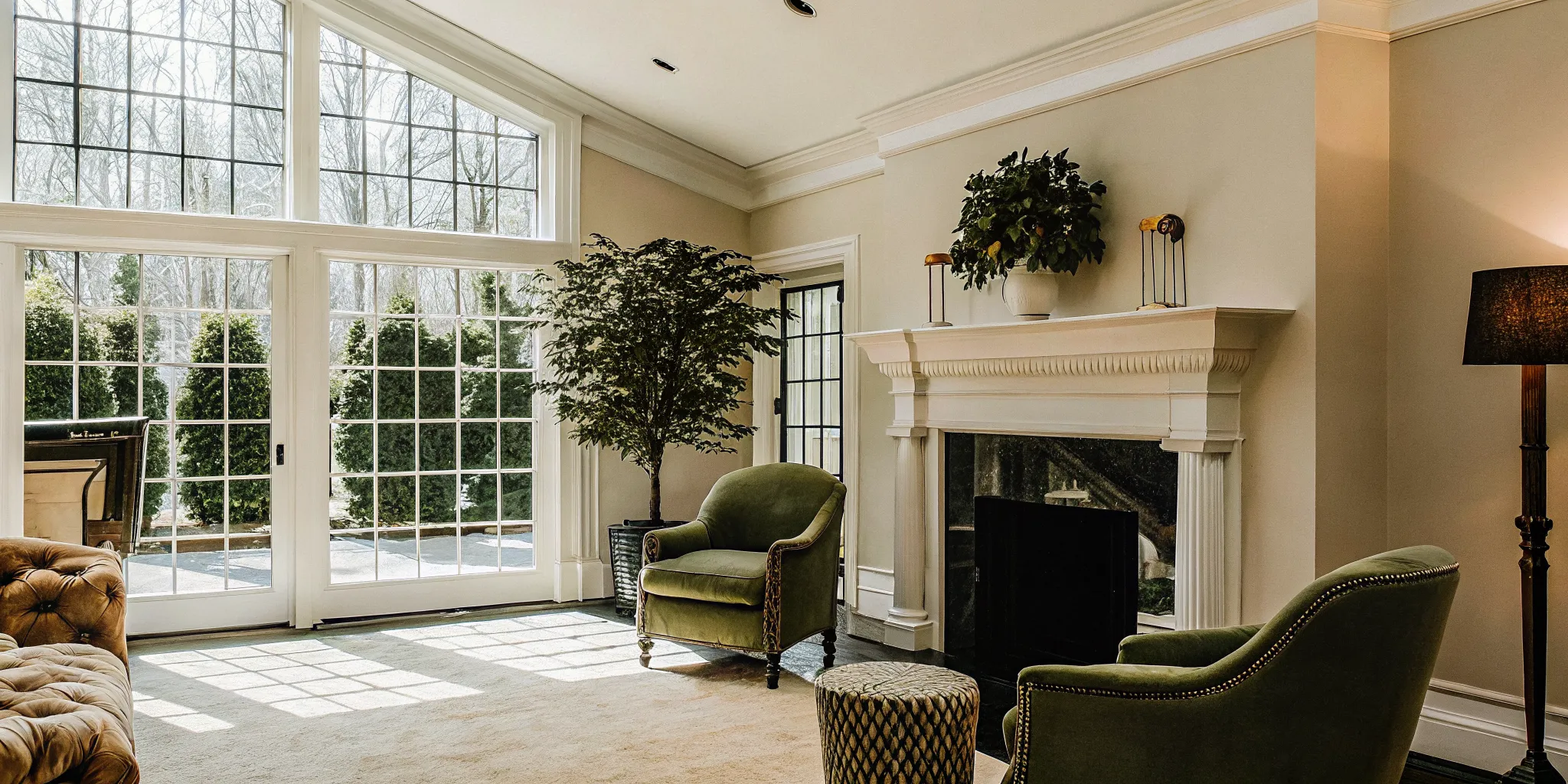
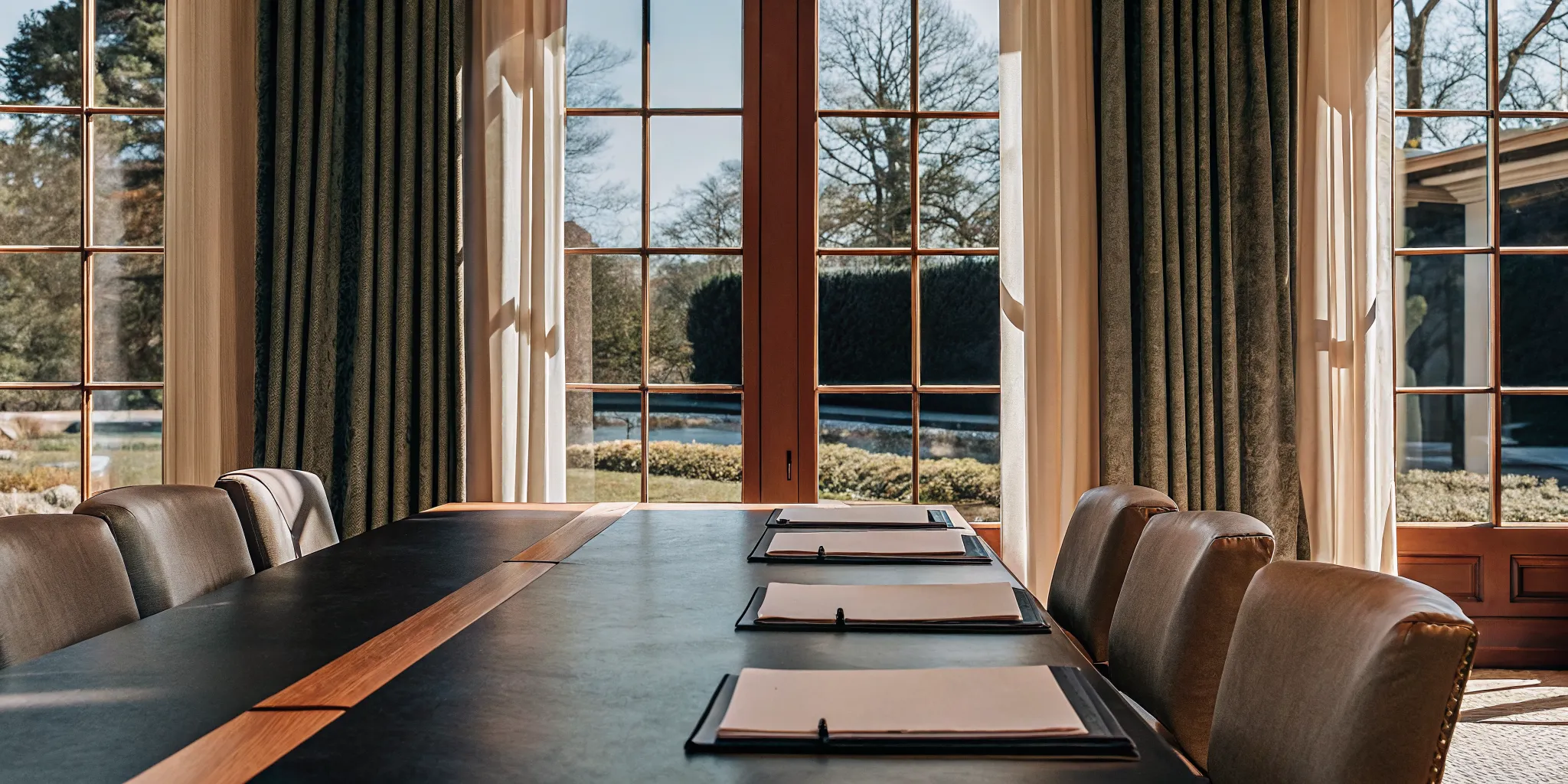
An 8,000-square-foot French Chateau-inspired estate offers a refined residential context rather than a standardized conference environment. On 11 private acres, the group can also use outdoor movement to reset attention or create space for smaller conversations. Planners can review the estate overview and then work with the concierge team to determine how the setting may support the intended flow. The critical question is always functional: what should participants be doing, thinking, or deciding in each part of the agenda?
Concierge coordination that protects leadership attention
Service quality at an executive retreat is measured by what leaders do not have to manage. The chief of staff should not be locating refreshments while the CEO is ready to resolve a strategic issue. The facilitator should not be troubleshooting routine logistics while a difficult conversation loses momentum. Concierge coordination helps separate the leadership work from the operational details of the stay.
That does not mean delegating the retreat’s purpose. The internal owner remains accountable for outcomes, participant preparation, and follow-through. The concierge team supports the experience and booking process through tailored recommendations and availability discussions. Because needs vary by group, pricing should be approached through a private inquiry rather than assumed from a fixed public package.
Contact the concierge team to discuss retreat objectives and request consideration for membership.
How should an executive retreat agenda be designed?
An executive retreat agenda should be designed backward from a small number of consequential outcomes. Each session needs a defined question, decision owner, required preparation, and tangible output. The agenda should protect time for debate, synthesis, and commitment while avoiding presentation-heavy blocks that reproduce an ordinary management meeting.
The retreat owner should begin by writing a one-page charter. It should explain why the gathering is necessary now, what must be different afterward, what falls outside scope, and who holds final decision rights. This document becomes the standard against which every agenda item is tested. If a proposed session does not advance an outcome, resolve a material uncertainty, or strengthen execution, it should not occupy scarce leadership time.
Start with the decisions, not the topics
Topics are broad: growth, talent, technology, culture. Decisions are specific: approve the market-entry sequence, select the operating model, determine the next two leadership hires, or agree on the capital threshold for an initiative. An agenda framed around topics invites updates and opinions. An agenda framed around decisions encourages preparation, tradeoffs, and closure.
For each decision, identify the accountable executive, consulted stakeholders, relevant evidence, and decision deadline. Clarify whether the group is deciding, recommending, or simply exploring. Many retreat frustrations arise because participants assume different levels of authority. A chief executive may believe a matter is ready for approval while functional leaders believe the session is an early consultation. Naming the decision mode prevents avoidable conflict.
Sequence the work to improve reasoning
Agenda sequence influences judgment. Begin with shared context and the most consequential uncertainties, not with ceremonial updates. Place cognitively demanding discussions when attention is strongest. Avoid deciding immediately after a dense presentation; create time for questions, reflection, and alternative views. When issues are interdependent, resolve foundational choices before downstream implications.
A useful sequence for a major strategic question is:
- Frame: state the decision, criteria, constraints, and decision owner.
- Inform: review only the evidence necessary to understand the choice.
- Challenge: surface assumptions, dissenting views, risks, and second-order effects.
- Explore: compare credible alternatives rather than defend one preferred answer.
- Decide: record the conclusion, rationale, boundaries, and unresolved questions.
- Commit: assign owners, milestones, communication actions, and review dates.
This sequence is more demanding than an update-driven agenda, but it produces a stronger record of why a choice was made and what must happen next.
Use pre-work to protect retreat time
Pre-work should inform the conversation, not pre-decide it. Send concise, decision-relevant material early enough for participants to absorb it. State what each person must review, prepare, or bring. If the packet is too long to be read with care, it is too long. Supporting detail can remain available without occupying the central narrative.
Ask participants to submit their principal concern, preferred outcome, and perceived risk before arrival. This gives the facilitator an early view of disagreement and prevents the loudest voice from defining the issue. For sensitive questions, individual pre-interviews may be appropriate. The findings can be synthesized without attributing every comment, allowing the group to confront patterns while respecting candor.
Balance intensity with recovery
Senior leaders can sustain difficult work only when the agenda recognizes cognitive limits. Recovery is not wasted time. A deliberate pause, private reflection period, outdoor walk, or unstructured meal can help participants integrate information and return with sharper judgment. The mistake is not including breaks; it is allowing breaks to become accidental extensions of routine work.
The estate setting makes it possible to vary rhythm without losing privacy or continuity. A working session can be followed by a smaller conversation on the grounds, then a return to the group for synthesis. The planner should protect those transitions from email, unrelated calls, and constant agenda changes. The objective is a composed pace, not a crowded schedule.
How can leaders improve decision quality during the retreat?
Leaders improve decision quality by making assumptions visible, separating evidence from advocacy, inviting disciplined dissent, and recording the rationale behind each commitment. A private setting supports these practices, but the team must deliberately design how choices will be examined and made.
Executive teams often arrive with well-developed positions. That preparation is useful, but it can also create confirmation bias. A strong retreat process asks participants to articulate what would have to be true for a proposal to succeed. What evidence could change their view, and which consequences may appear beyond the immediate planning horizon. This shifts debate from personality and persuasion toward testable reasoning.
Define decision rights before debate
Not every participant has the same role in every decision. Clarify who recommends, who provides input, who must agree, and who makes the final call. Without that clarity, consensus can become a substitute for accountability, or authority can be exercised only after a long discussion that participants mistakenly believed was collaborative decision-making.
Decision rights should be matched with transparent rationale. A final decision owner may choose an option that is not preferred by every executive. But the team should understand the governing criteria and why the choice serves the enterprise. This is especially important when tradeoffs cross functional boundaries. Clarity preserves trust even when unanimity is neither possible nor desirable.
Make dissent productive
Dissent improves decisions when it is specific, evidence-based, and directed toward the choice rather than the person. Establish this expectation at the beginning of the retreat. The facilitator can ask one participant to articulate the strongest case against an emerging consensus, or ask each executive to identify the risk most likely to be underestimated. These techniques make challenge a normal part of governance rather than a sign of disloyalty.
Psychological safety does not mean comfort or agreement. It means participants can raise material concerns without fearing personal consequence. Complete privacy supports that condition, particularly for sensitive leadership topics. The team should still distinguish confidential candor from unconstructive speculation. Every concern should eventually connect to evidence, a decision criterion, or a proposed mitigation.
Use a visible decision record
Record decisions as they happen. A useful decision record includes the question, conclusion, rationale, owner, relevant constraints, dissent or unresolved risk, communication plan, and review date. This record prevents later reinterpretation and gives the organization a credible explanation for action. It also makes it possible to revisit a decision when underlying assumptions change.
- Decision: What exactly was approved, rejected, deferred, or delegated?
- Rationale: Which criteria and evidence governed the choice?
- Accountability: Who owns execution and who provides support?
- Boundaries: What is explicitly outside the decision?
- Review: When will leaders examine progress or reconsider assumptions?
Takeaway: A retreat should produce not only decisions, but also a reliable record that strengthens execution and institutional memory.
Separate reversible and irreversible choices
Some decisions can be tested and adjusted. Others create commitments that are expensive, public, or difficult to reverse. The team should not apply the same process to both. Reversible choices benefit from speed, clear hypotheses, and rapid learning. Irreversible choices justify deeper evidence, broader challenge, and explicit risk review.
This distinction protects the agenda from two common failures: over-analyzing small choices and rushing consequential ones. It also helps the chief executive delegate appropriately. When leaders agree on which decisions require collective attention, the retreat can focus on matters worthy of the full group.
How should a retreat build stakeholder alignment?
A retreat builds stakeholder alignment when leaders leave with a shared understanding of the decision. Its rationale, their individual obligations, and the message that will reach the wider organization. Alignment is not passive agreement; it is coordinated commitment despite legitimate differences in perspective.
Leadership teams sometimes mistake a positive closing conversation for alignment. Genuine alignment becomes visible only when executives make consistent choices after the retreat. If one function continues to fund a deprioritized initiative, if regional leaders hear different versions of the strategy. Or if managers cannot explain what changed, the retreat produced sentiment rather than alignment.
Map stakeholders before the retreat
Identify who will be affected by the decisions, who can influence execution, and who needs to understand the rationale. This includes people not attending. Board members, investors, functional leaders, managers, employees, clients, or partners may each require a distinct communication and engagement approach. The purpose of the map is not to expand the retreat invitation. It is to anticipate how decisions will travel through the organization.
For each stakeholder group, assess likely questions, concerns, required actions, and the appropriate messenger. A chief financial officer may need to explain capital implications, while a people leader addresses role or organizational consequences. Coordinated messages should be accurate and consistent without sounding scripted or evasive.
Clarify enterprise priorities and functional tradeoffs
Alignment becomes difficult when each executive interprets strategy through the priorities of one function. A retreat should make enterprise-level tradeoffs explicit. If growth investment increases, what will receive less capital or attention? If the organization adds a priority, what will it stop doing? If speed matters, where is the team willing to accept greater risk?
These questions move the group beyond slogans. Leaders can support the same strategic direction while disagreeing about the cost, sequence, or operating implications. The retreat must resolve enough of those differences to permit coordinated action. Where uncertainty remains, define how it will be tested and who will decide after new evidence arrives.
Rehearse the communication cascade
Before departure, ask each leader to explain the core decisions in their own words. Compare the explanations. Differences often reveal unresolved assumptions or language that could confuse the organization. Refine the message until the team can communicate a coherent account of what changed, why it changed, what remains stable, and what happens next.
The cascade should include timing, audience, messenger, channel, and feedback path. Leaders also need agreed responses to likely objections. Alignment does not require suppressing nuance, but it does require avoiding contradictory interpretations. A concise narrative supported by a decision record is usually more credible than a long presentation.
For retreat planners comparing settings, the estate’s private-membership approach can support the discretion required while this alignment work develops.
How can a retreat convert strategy into execution?
A retreat converts strategy into execution by translating decisions into named owners, near-term milestones, resource commitments, communication actions, and scheduled reviews. Without this operating bridge, even an excellent strategic discussion will be absorbed by routine demands within days.
The final phase of the agenda should not be a recap of what everyone enjoyed. It should be an execution session. Return to each decision and determine what will be different on the first business day after the retreat. Assign one accountable owner, not a committee. Identify dependencies, required resources, and the first evidence that implementation is moving.
Use a 30-, 60-, and 90-day commitment horizon
A practical horizon creates urgency without pretending every strategic result will arrive quickly. During the first 30 days, the team may communicate decisions, stop conflicting work, assign resources, and complete essential analysis. By 60 days, leaders should expect visible movement on major initiatives and early resolution of dependencies. By 90 days, the team should be able to evaluate whether the chosen direction is producing the intended signals.
Each commitment should be observable. Replace statements such as “improve collaboration” with specific changes to decision forums, information flow, or cross-functional responsibilities. Replace “advance the strategy” with named milestones and decision points. Precision allows the leadership team to distinguish genuine execution from activity.
Establish governance after departure
Governance is the mechanism that keeps decisions alive. Determine which existing meeting will review progress, what information the owner must provide, when risks should be escalated, and what conditions justify reconsideration. Avoid creating a separate governance layer unless necessary. The strongest follow-through often integrates retreat commitments into the operating cadence leaders already use.
- Schedule the first progress review before participants leave.
- Assign one executive owner to every major commitment.
- Document dependencies and the leader accountable for resolving each one.
- Define the evidence that indicates progress, risk, or the need to change course.
- Confirm how decisions and commitments will be communicated beyond the room.
- Retire or deprioritize work that conflicts with the agreed direction.
Close with individual commitments
Enterprise execution depends on personal behavior. Each executive should state what they will do, what they will stop doing, and what support they require from colleagues. This is especially important when the retreat addresses leadership norms or organizational change. Collective language can conceal individual ambiguity; named commitments expose it.
A final round should also identify any concern that could weaken execution. The objective is not to reopen every decision. It is to surface practical barriers while the relevant leaders are still together. The retreat owner can then issue a concise written record promptly after departure and begin governance from a position of clarity.
Takeaway: The retreat is complete only when the organization can see a credible path from leadership decision to operating action.
How should planners prepare a focused executive retreat?
Planners should prepare a focused executive retreat by aligning purpose, participants, decision rights, logistics, confidentiality, and follow-through well before arrival. The work is both strategic and operational: every detail should either protect leadership attention or improve the quality of the intended outcomes.
The chief of staff or retreat owner should act as the integrator. They connect the executive sponsor’s objectives, the facilitator’s process, the concierge team’s coordination, and each participant’s preparation. This role requires authority to remove low-value content and challenge requests that dilute the purpose. A beautifully organized retreat can still fail if the agenda avoids the decisions that matter.
Executive retreat planning list
- Write the retreat charter. Define why the gathering is necessary, what must be decided, and what success looks like 90 days later.
- Confirm the decision group. Invite people with authority, essential knowledge, or execution responsibility; use selected sessions for other contributors.
- Set decision rights. Clarify who decides, recommends, advises, and owns implementation for each major question.
- Assess confidentiality. Establish attendance, document, device, photography, and communication protocols.
- Select the setting. Match privacy, capacity, flow, location, and service coordination to the retreat’s purpose.
- Design backward from outputs. Give every session a question, owner, method, and tangible result.
- Prepare participants. Send concise pre-work, expectations, arrival information, and the retreat charter.
- Plan the decision record. Assign someone to capture conclusions, rationale, ownership, risk, and review dates.
- Protect the pace. Balance demanding sessions with purposeful transitions, meals, reflection, and recovery.
- Coordinate logistics. Resolve transportation, parking, overnight arrangements, day guests, materials, and contingency plans.
- Rehearse the communication cascade. Agree on stakeholder messages, timing, messengers, and feedback routes.
- Schedule follow-through. Place the first governance review on the calendar before departure.
Questions to bring to the concierge conversation
A tailored inquiry is more useful than asking for a generic package. Share the expected mix of overnight and day guests, broad agenda flow, desired level of privacy, transportation plan, and any important constraints. Ask how the estate setting may support arrival, full-group work, smaller conversations, meals, and periods of reflection. The discussion should help the planner determine fit without making assumptions about a standardized public offering.
- How might the estate support our desired sequence of plenary, breakout, and informal dialogue?
- What should we consider for 16+ overnight guests in 8 bedrooms or up to 30 day guests?
- How should parking for 10+ vehicles shape transportation planning?
- What information will help the concierge team tailor recommendations?
- How does a prospective guest request consideration for membership?
The contact page is the appropriate starting point for availability, tailored recommendations, and membership consideration. No fixed public pricing should be assumed because requirements and recommendations depend on the nature of the gathering.
The Charles Chateau private estate advantage
The Charles Chateau offers a distinctive balance for leaders seeking an executive retreat venue near Boston: complete privacy. Rare estate-scale space, French Chateau-inspired sophistication, and concierge-level coordination within approximately 20 minutes of downtown Boston. The estate is designed for private use rather than the rhythms of a public hotel or conventional event venue.
A setting proportioned for leadership work
The 8,000-square-foot private estate sits on 11 private acres in Dedham, Massachusetts. That scale gives a leadership group room to remain together while shifting between modes of work. The estate can accommodate 16+ overnight guests in 8 bedrooms, host up to 30 day guests for a gathering, and provide parking for 10+ vehicles. These concrete parameters allow planners to build a thoughtful attendance and transportation plan.
The setting also carries an important signal. Bringing leaders to a refined private estate communicates that the work deserves focus and discretion. The residential character can reduce the formality that inhibits candor while preserving a level of sophistication appropriate for board members, C-suite executives, and invited stakeholders. Planners can begin with the The Charles Chateau estate overview when considering fit.
Private membership and concierge-led inquiry
The Charles Chateau is not presented as publicly bookable lodging or a public event venue. Reservations are extended to active members and invited guests. Prospective guests may request consideration for membership, and the concierge team can discuss availability and tailored recommendations. This approach preserves the estate’s discretion and allows the planning conversation to reflect the group’s actual needs.
For an executive team, that relationship matters. Retreat design involves more than selecting dates and a room configuration. The planning team must consider participant flow, privacy expectations, arrival, overnight needs, day guests, and the desired tone of the experience. Concierge coordination supports this process so leaders can remain focused on their responsibilities.
Close enough for access, private enough for focus
Approximately 20 minutes from downtown Boston, the estate offers meaningful separation without a burdensome journey. It can help a team step outside daily operating patterns while retaining access to the city. The location is especially relevant when a retreat includes local leaders, out-of-market participants, or selected day guests whose presence is important for a portion of the agenda.
Request Availability and begin a private conversation with the concierge team.
Frequently Asked Questions
What makes an ideal executive retreat venue near Boston?
An ideal executive retreat venue near Boston combines complete privacy, manageable access, flexible settings for different modes of work, and service coordination that protects leadership attention. It should support the retreat’s decision process rather than impose a standard event schedule. Planners should evaluate confidentiality, capacity, transportation, overnight needs, day guests, and the ability to move between full-group discussion, smaller conversations, and reflection.
Why choose a private estate for an executive retreat near Boston?
A private estate gives a leadership team greater control over privacy, pace, and participant flow than a shared public setting. That control supports candid discussion of sensitive issues and allows the agenda to adapt to the natural progression of decisions. At The Charles Chateau, estate-scale space and a private-membership approach create a refined context for invited leadership groups.
How far from Boston should an executive retreat venue be?
The right distance balances access with psychological separation from daily operations. A setting approximately 20 minutes from downtown Boston can protect executive time while still creating a meaningful change of context. The Charles Chateau is located in Dedham on 11 private acres, offering proximity to the city without the shared environment of a downtown meeting property.
What capacity does The Charles Chateau offer for an executive retreat?
The Charles Chateau can accommodate 16+ overnight guests in 8 bedrooms, up to 30 day guests for gatherings, and parking for 10+ vehicles. Planners should confirm the participant mix and desired agenda flow with the concierge team. Reservations are extended to active members and invited guests; prospective guests may request consideration for membership.
Request a private executive retreat conversation
A consequential retreat deserves a setting selected with the same care as its agenda. If your leadership team needs privacy, estate-scale space, and a composed environment near Boston. The Charles Chateau offers a distinctive alternative to a public hotel or conventional meeting venue. Begin by sharing the purpose of the gathering, anticipated participant mix, preferred timing, and the decisions the retreat is intended to advance.
The concierge team can discuss availability, tailored recommendations, and the process for requesting consideration for membership. Because each gathering is considered individually, the conversation is inquiry-led rather than based on fixed public pricing. Review the private estate experience or visit the member access page to learn more, then take the next step when the retreat charter and intended outcomes are clear.