Choosing an estate venue near Boston is less about finding the most impressive address than understanding how the setting will shape the experience. Privacy, arrival, and overnight comfort all matter. So does the ease of moving between focused conversation and relaxed time when the guest list is important and the schedule carries real expectations.
A useful massachusetts estate venues comparison looks beyond appearance to access, exclusivity, service, design, and group flow. For planners seeking a private setting close to the city. The Charles Chateau is a luxury private estate rental and exclusive event venue in Dedham, approximately 20 minutes from downtown Boston. Its whole-estate model is designed for members and invited guests, with concierge support integrated into the booking and stay.
That makes the first question practical: will the venue give your group enough privacy, proportion, and flexibility for the way you intend to gather? A luxury estate rental in Dedham offers one useful reference point as you weigh the details that distinguish a polished private experience from a conventional event setting.
What Does a Massachusetts Estate Venues Comparison Reveal?
A useful Massachusetts estate venues comparison begins with the experience the setting can create, not simply its appearance in photographs. Privacy, access, overnight capacity, service, design, and flexibility all shape how a group works, rests, and spends time together. A venue that performs well across those criteria can feel considered from arrival through departure.
Privacy and access should work together
For groups that value discretion, whole-estate use is a meaningful distinction. The Charles Chateau is rented as one unit, with no concurrent bookings, so the group can move through the property without sharing its gathering spaces with another event. Reservations are for active members and invited guests, which supports a private, residential experience rather than a publicly bookable venue model.
That privacy does not require a remote journey. The estate is in Dedham, Massachusetts, approximately 20 minutes from downtown Boston. For an executive team or a family coordinating guests from different locations, that proximity can make the beginning and end of a gathering more manageable. It also gives planners a private setting without asking every attendee to commit to a long drive from the city.
Overnight capacity and service affect the whole experience
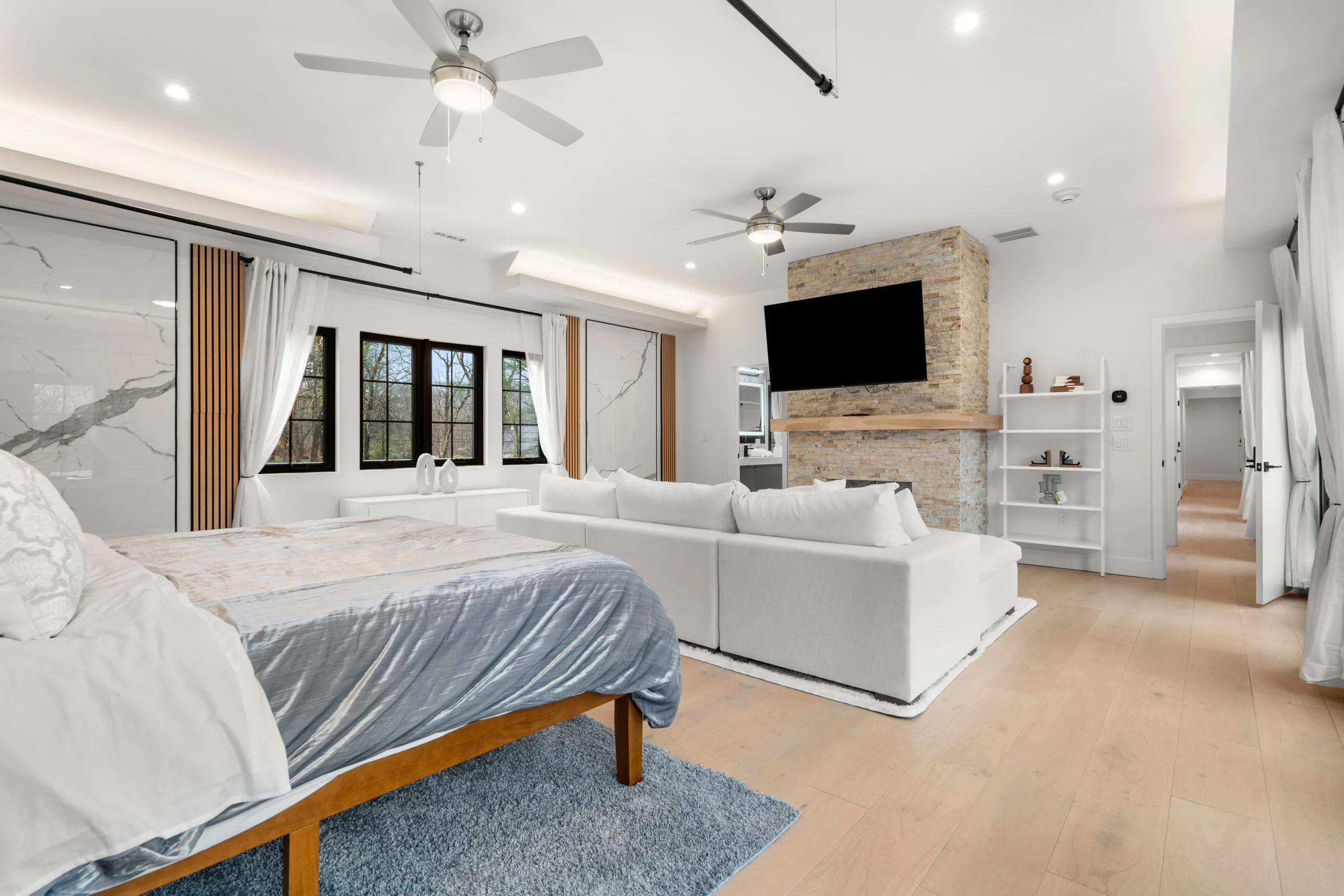
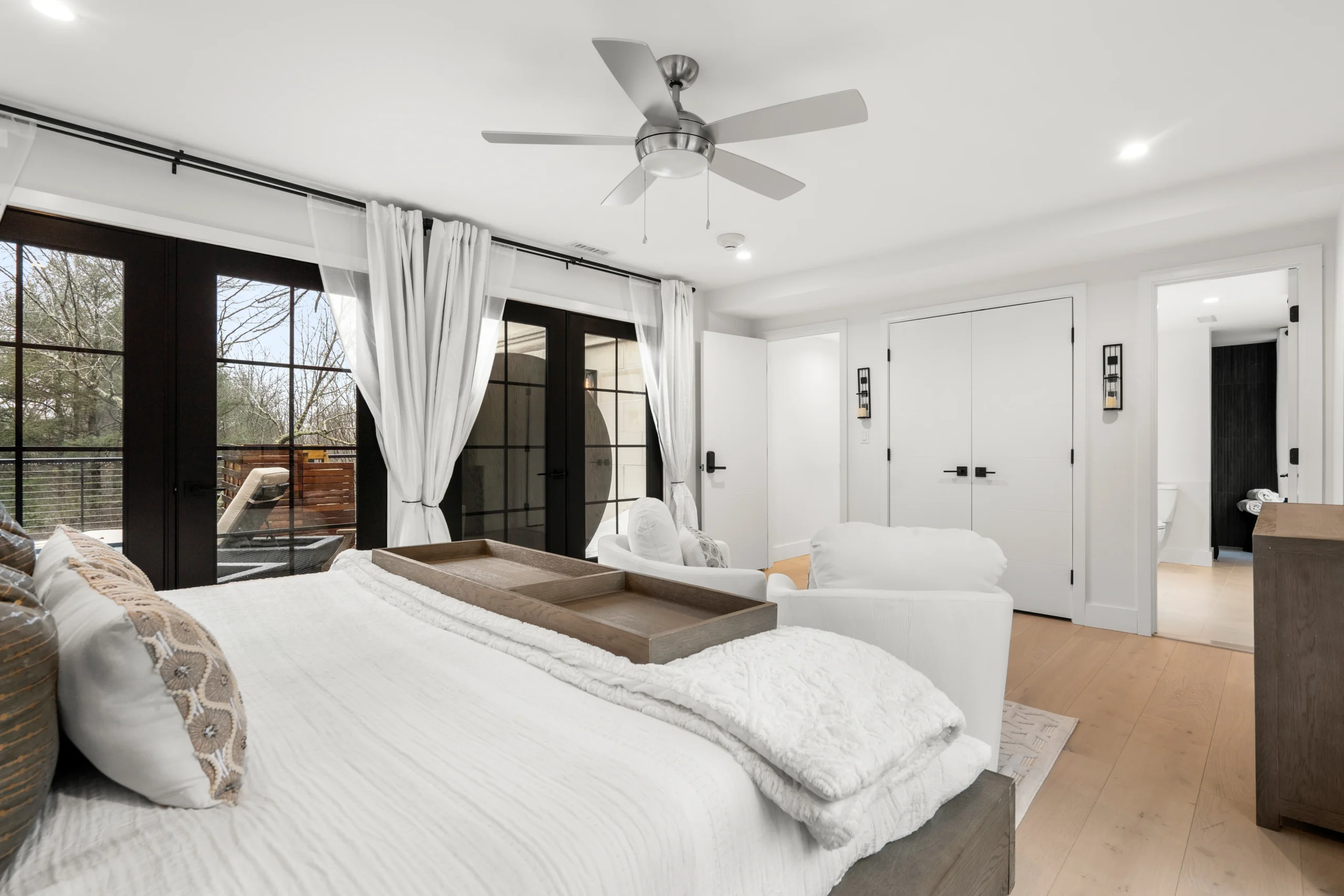
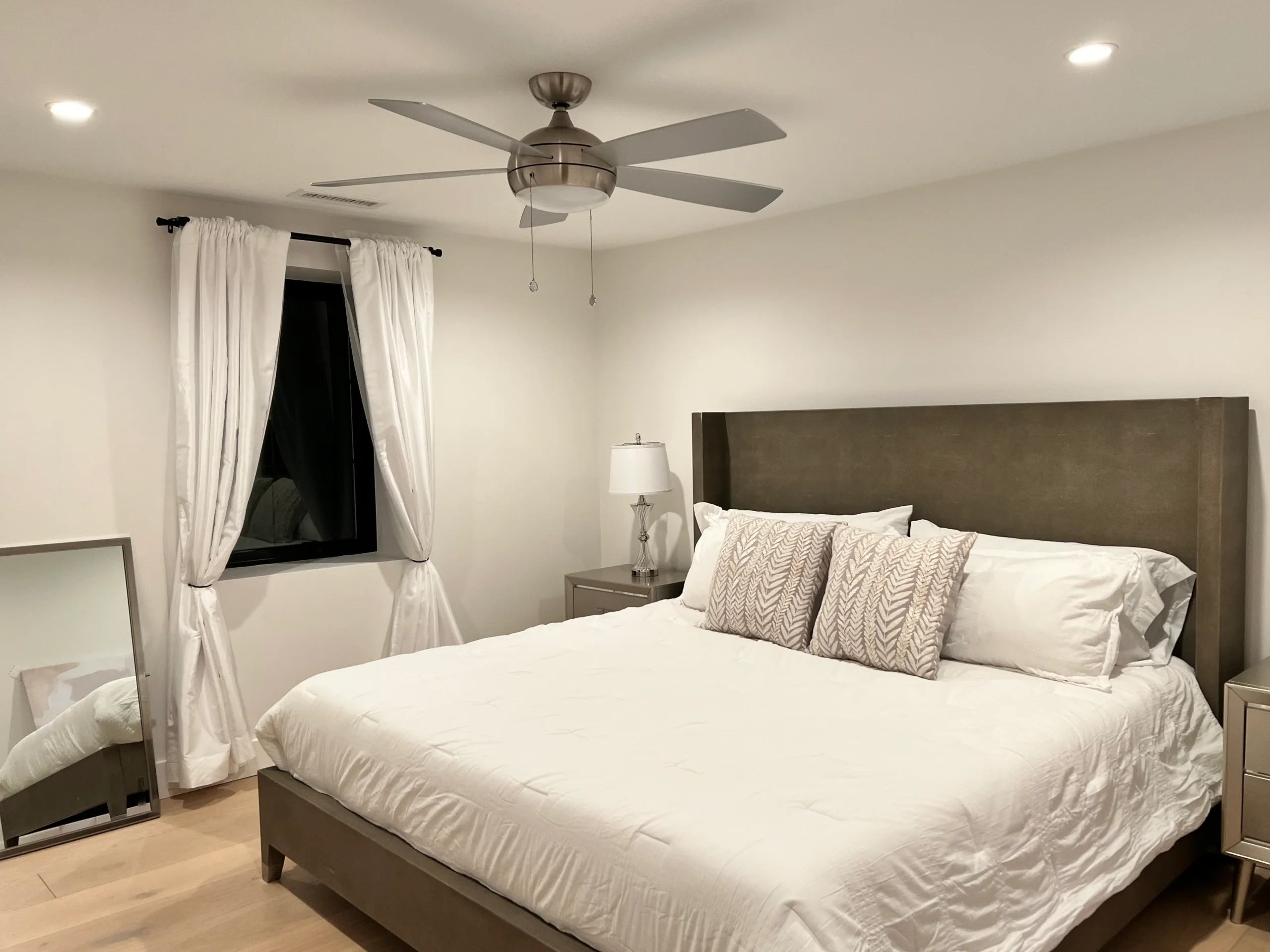
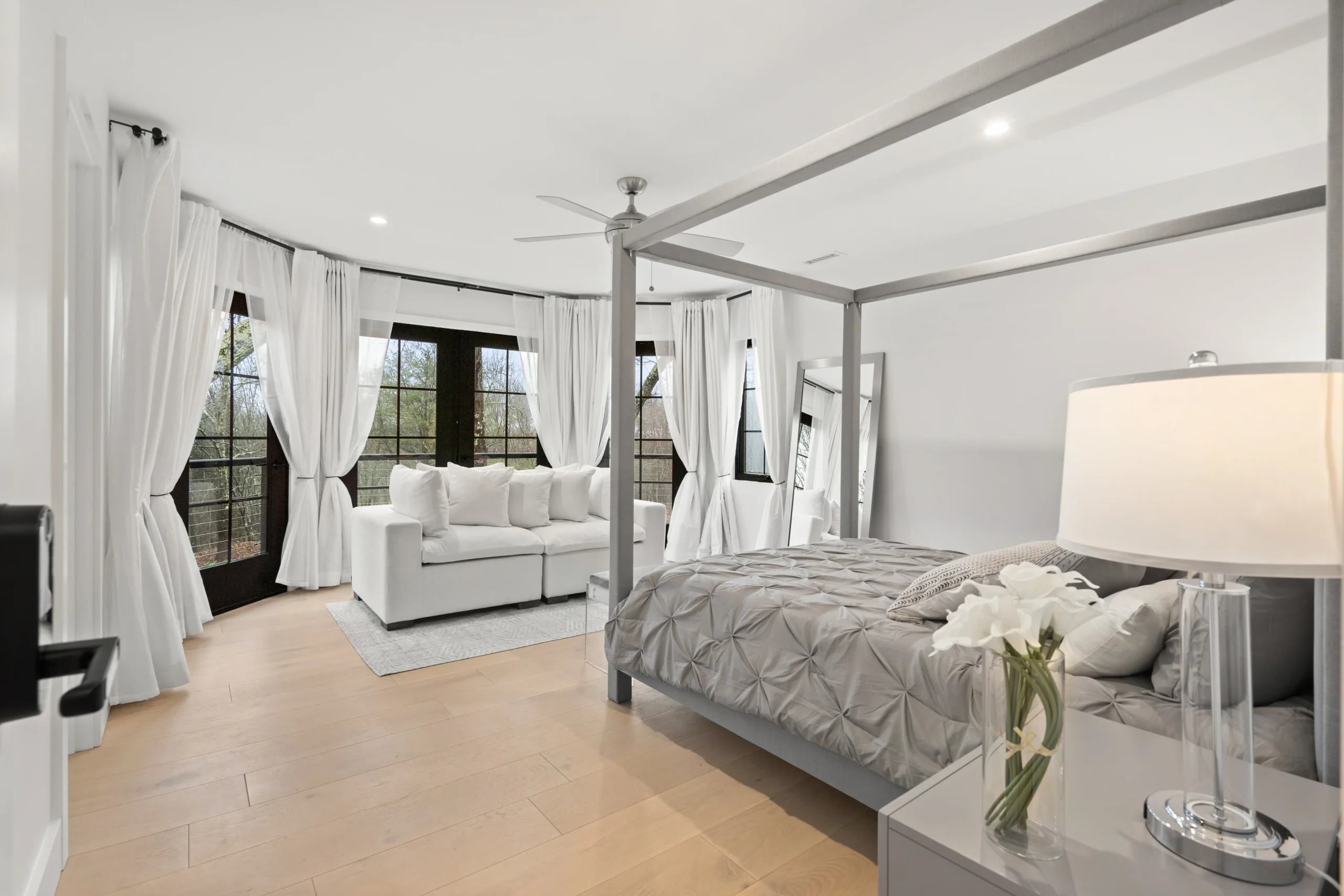
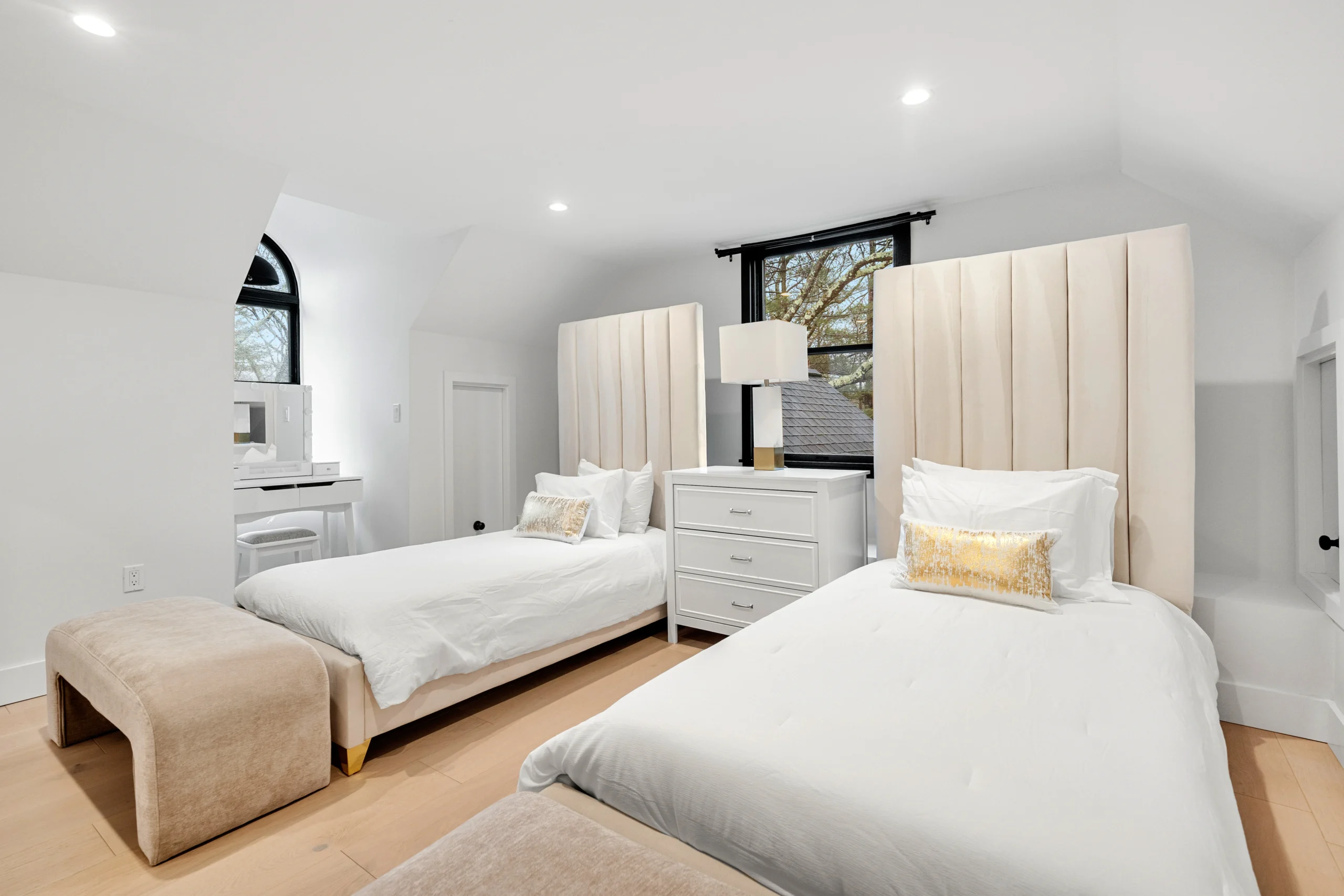
Overnight accommodation changes the rhythm of a gathering. Eight bedrooms provide space for 16 or more overnight guests. A group can continue conversations over breakfast, use the property at an unhurried pace, and avoid splitting the experience between a venue and separate hotel rooms. Capacity still needs to be matched to the event brief, room assignments, and desired level of comfort. On-site lodging remains an important criterion for multiday retreats and celebrations.
Service is equally practical. Concierge support is part of the booking and stay experience, rather than a generic add-on. For planners, that can mean a more coordinated path through the details of an executive retreat, private dinner, celebration, or wedding weekend. The executive retreat venue near Boston guide explores how that support can serve focused collaboration and a polished group experience.
Design should support more than one kind of gathering
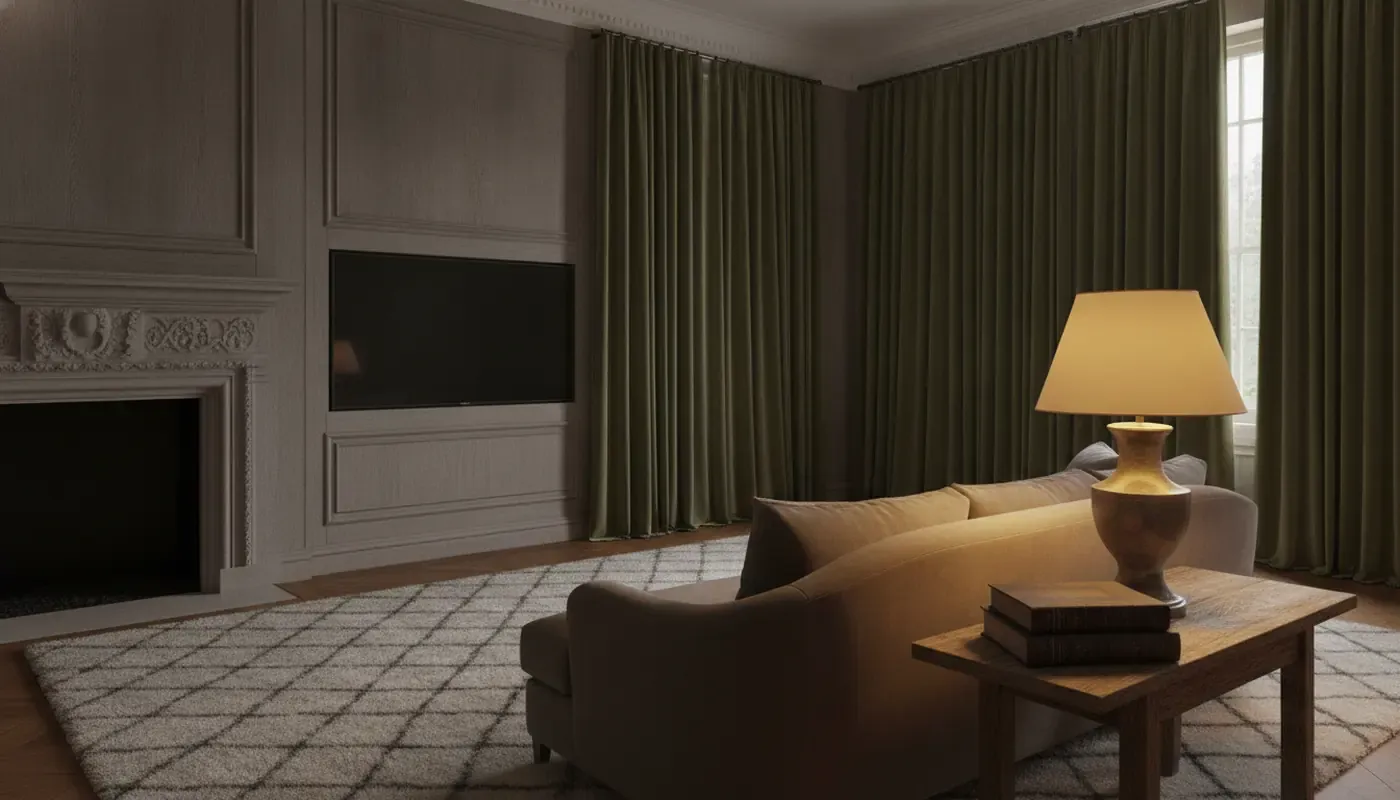
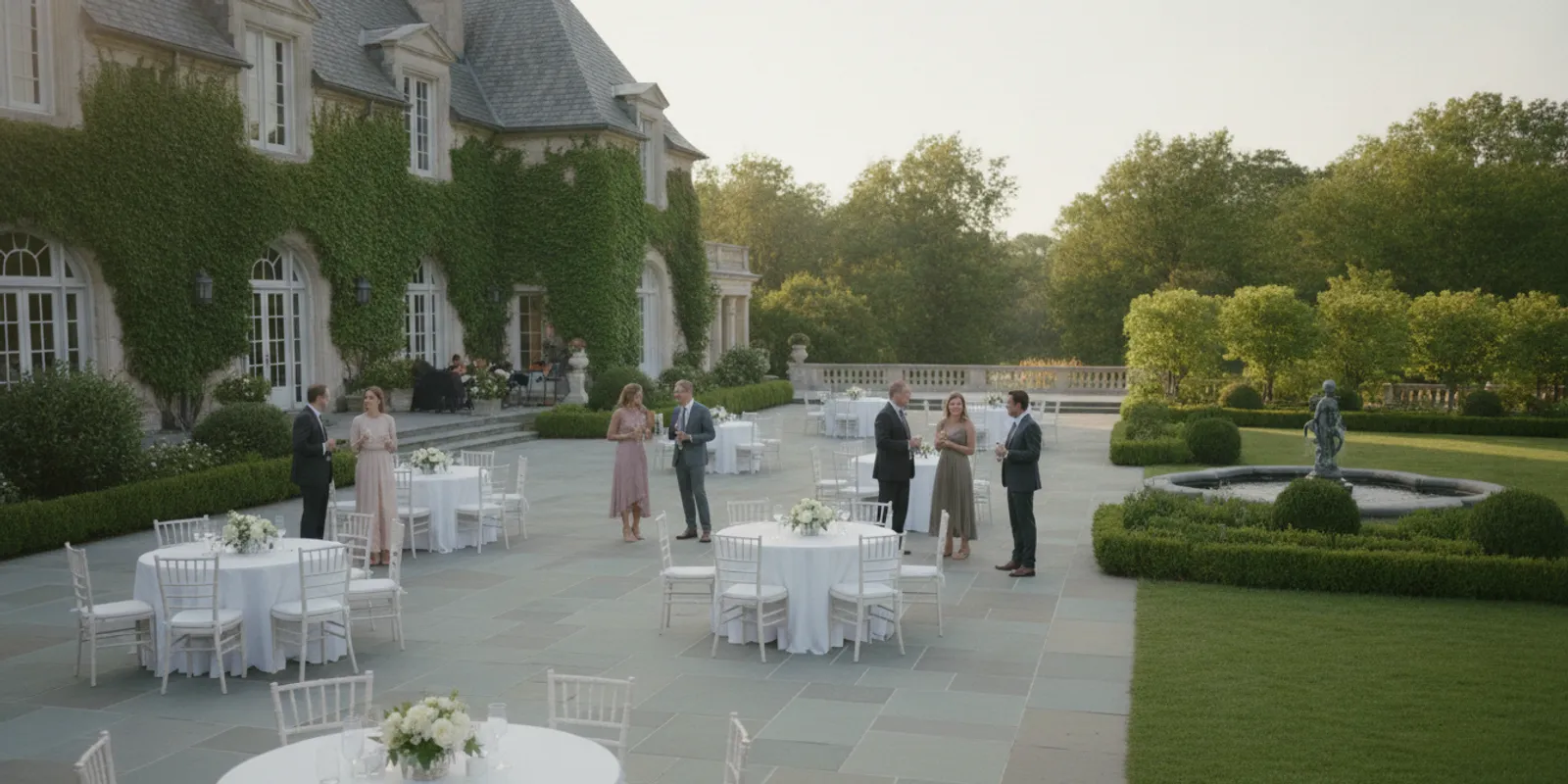
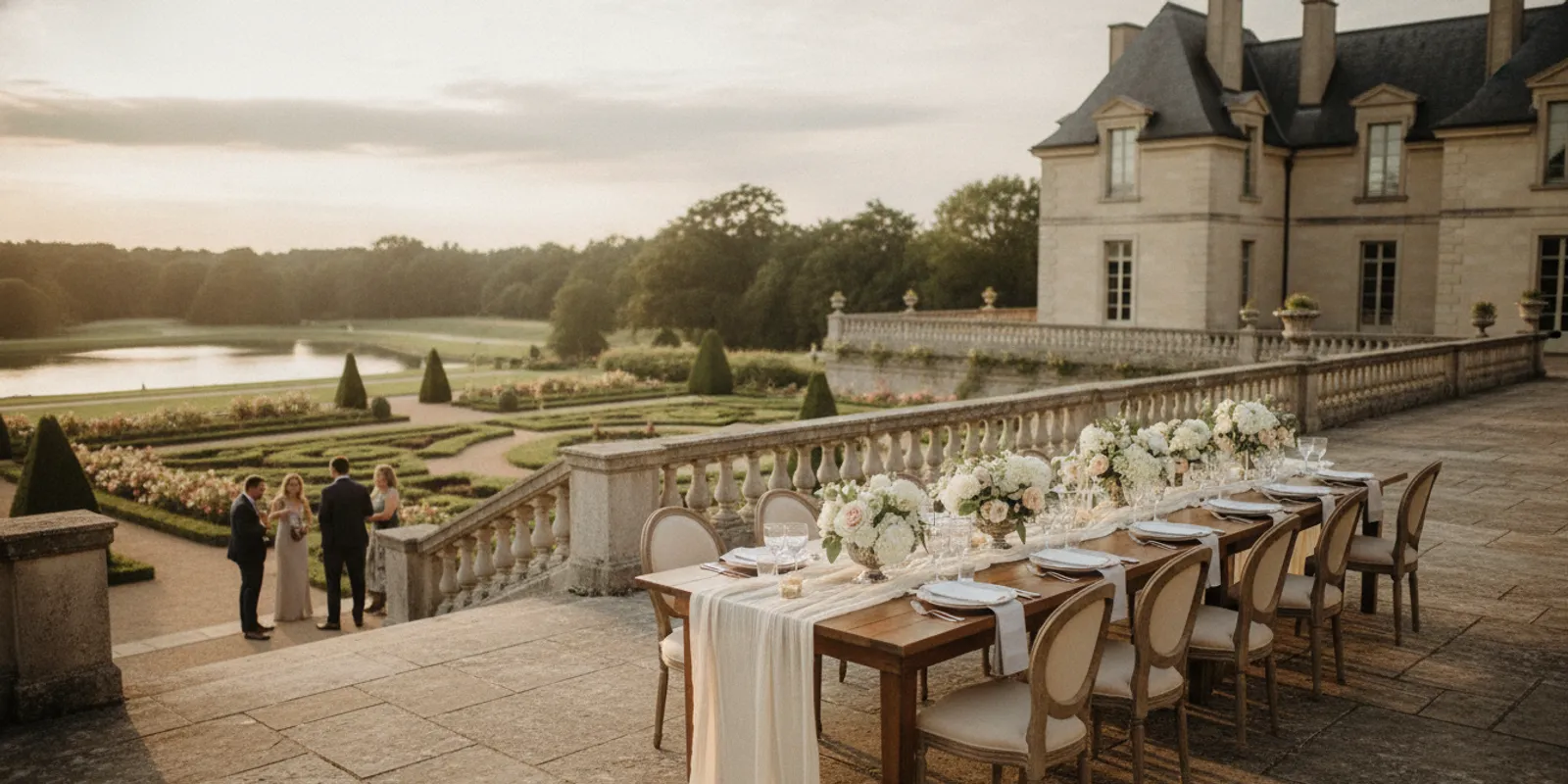
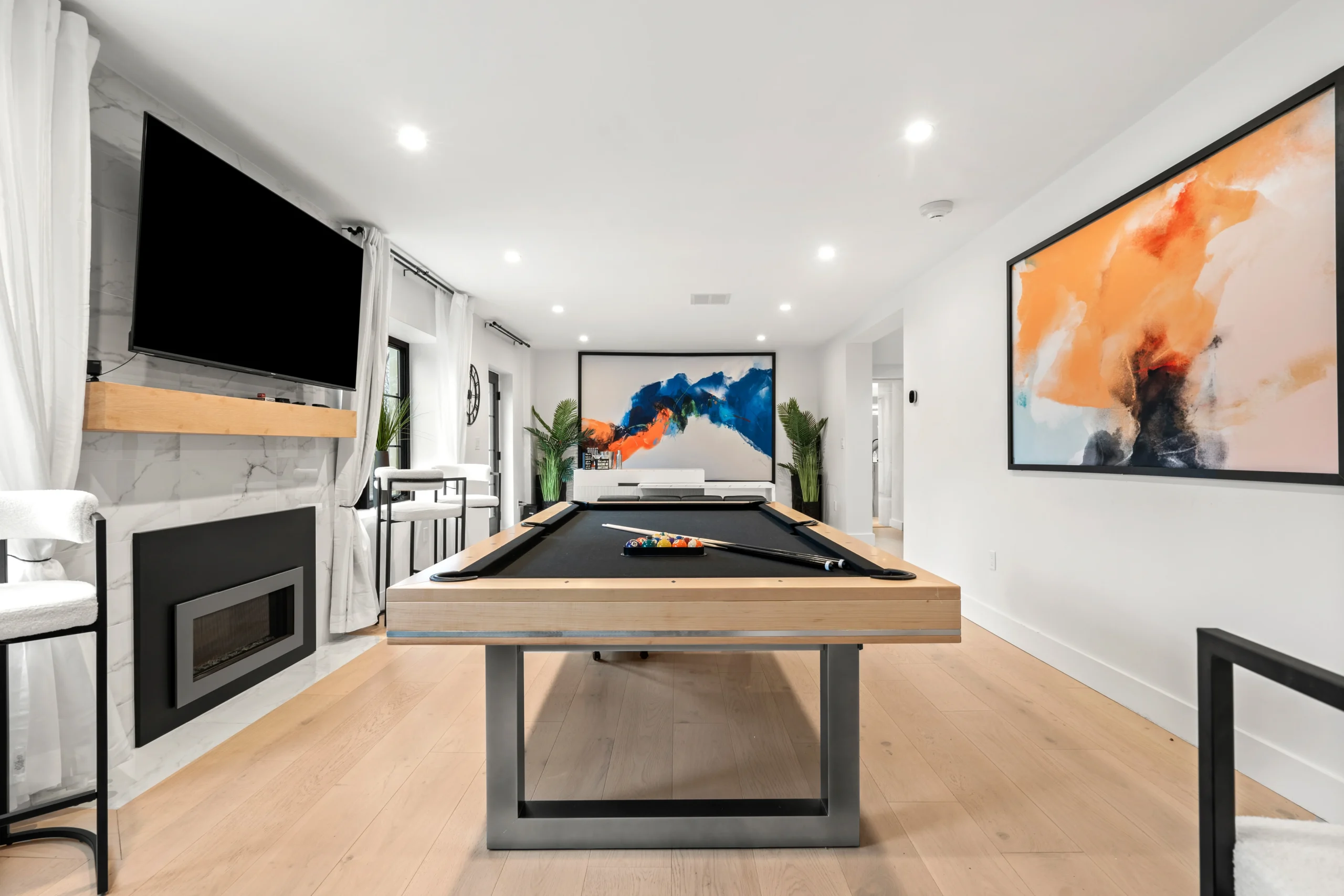
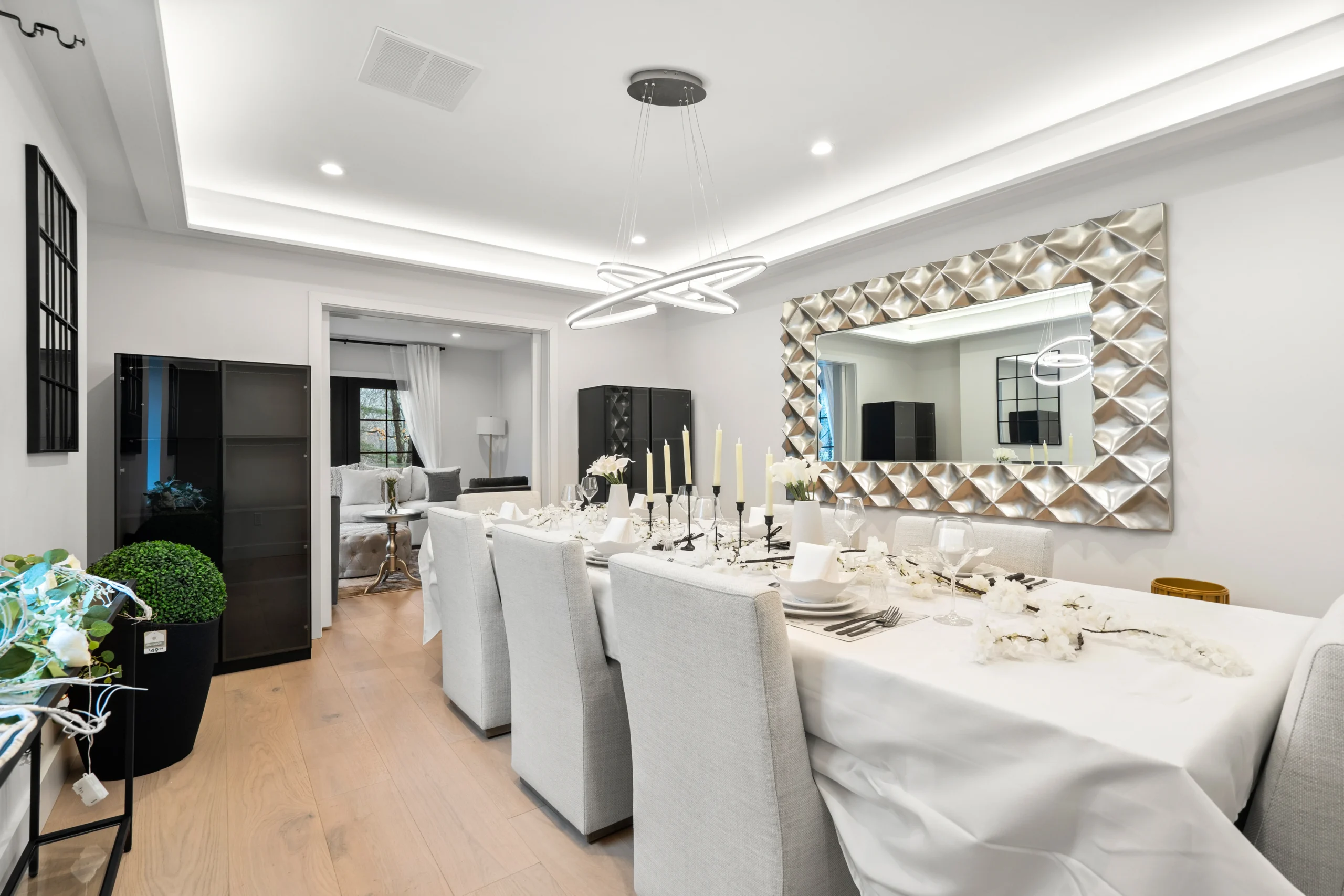
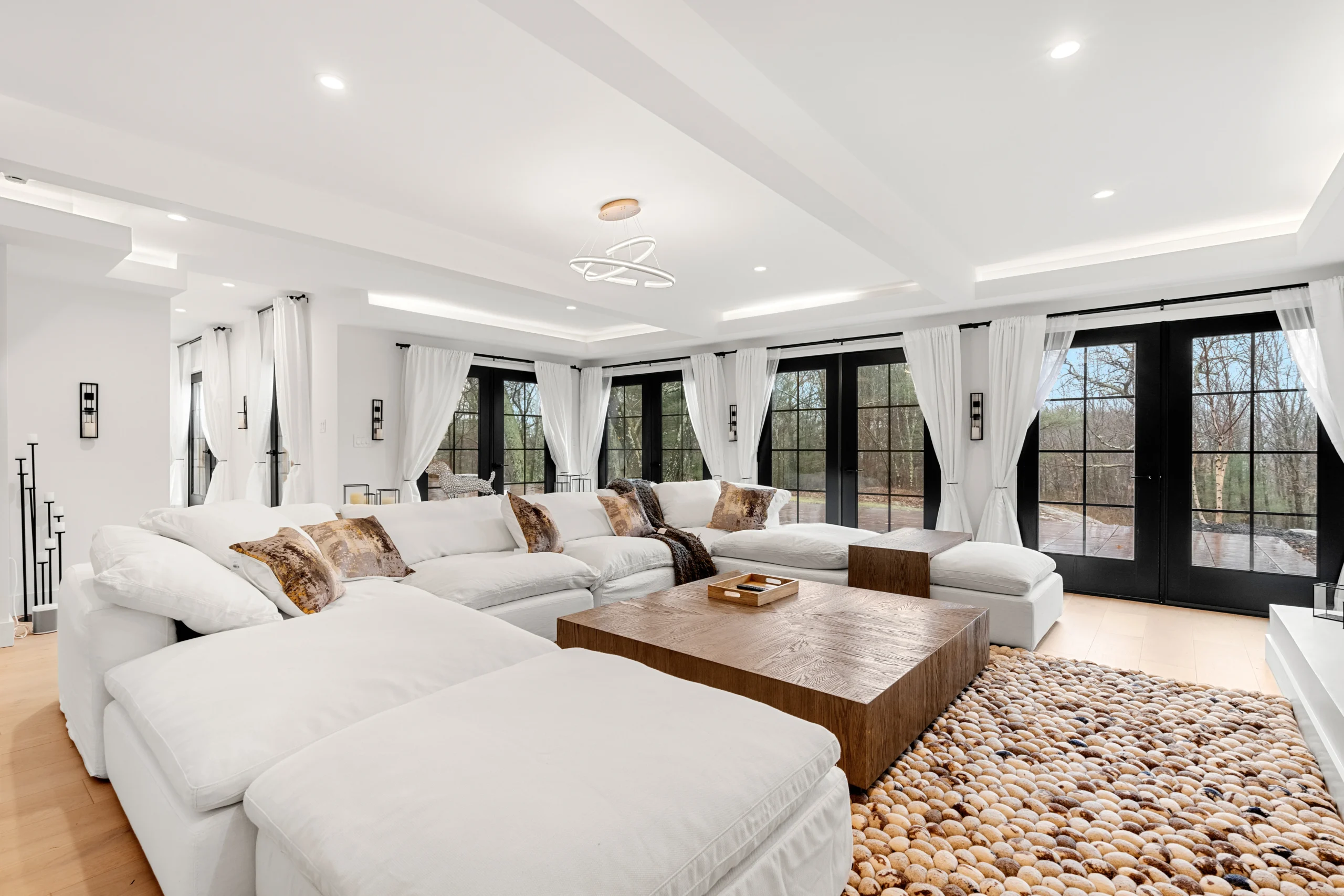
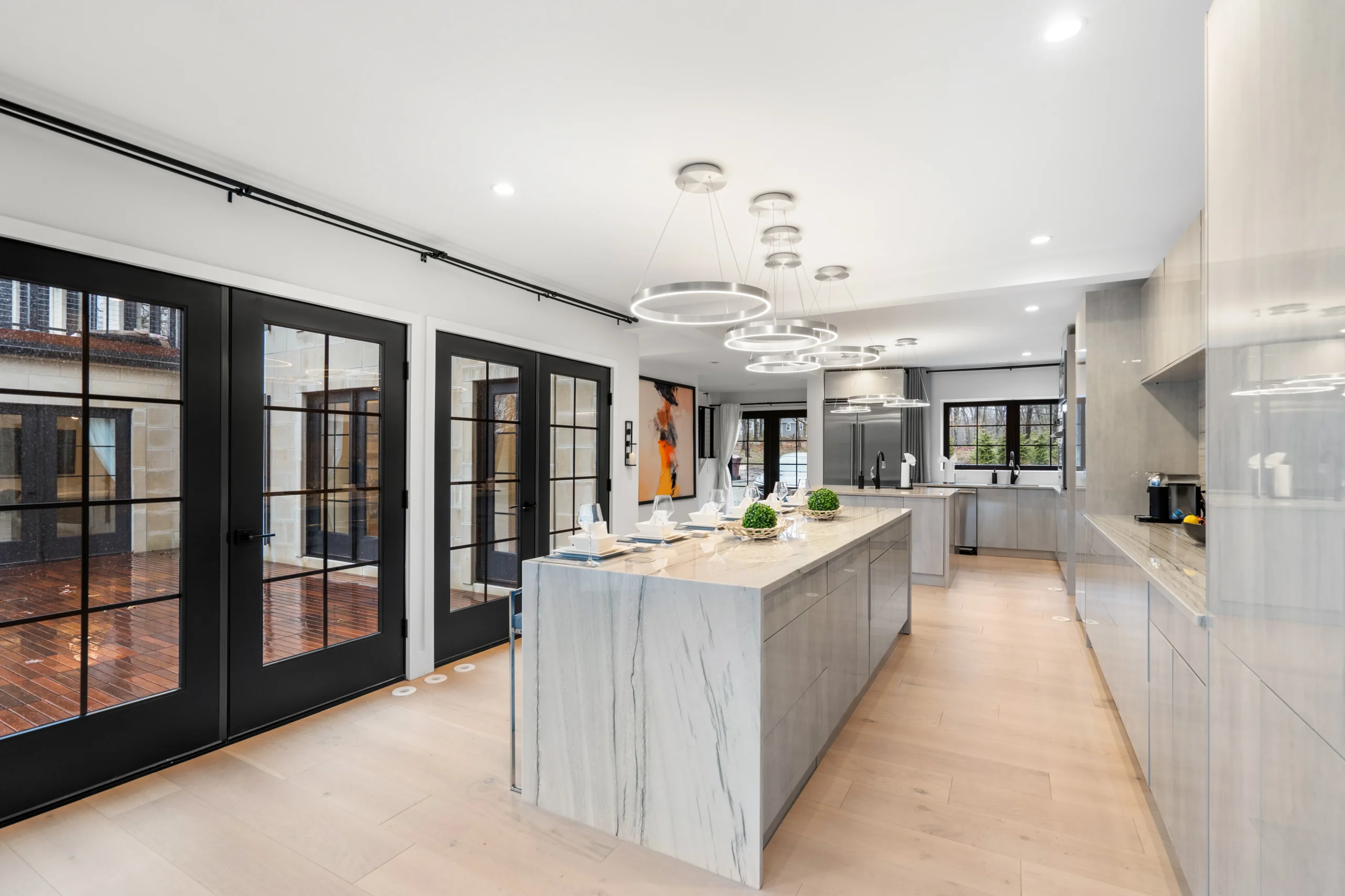
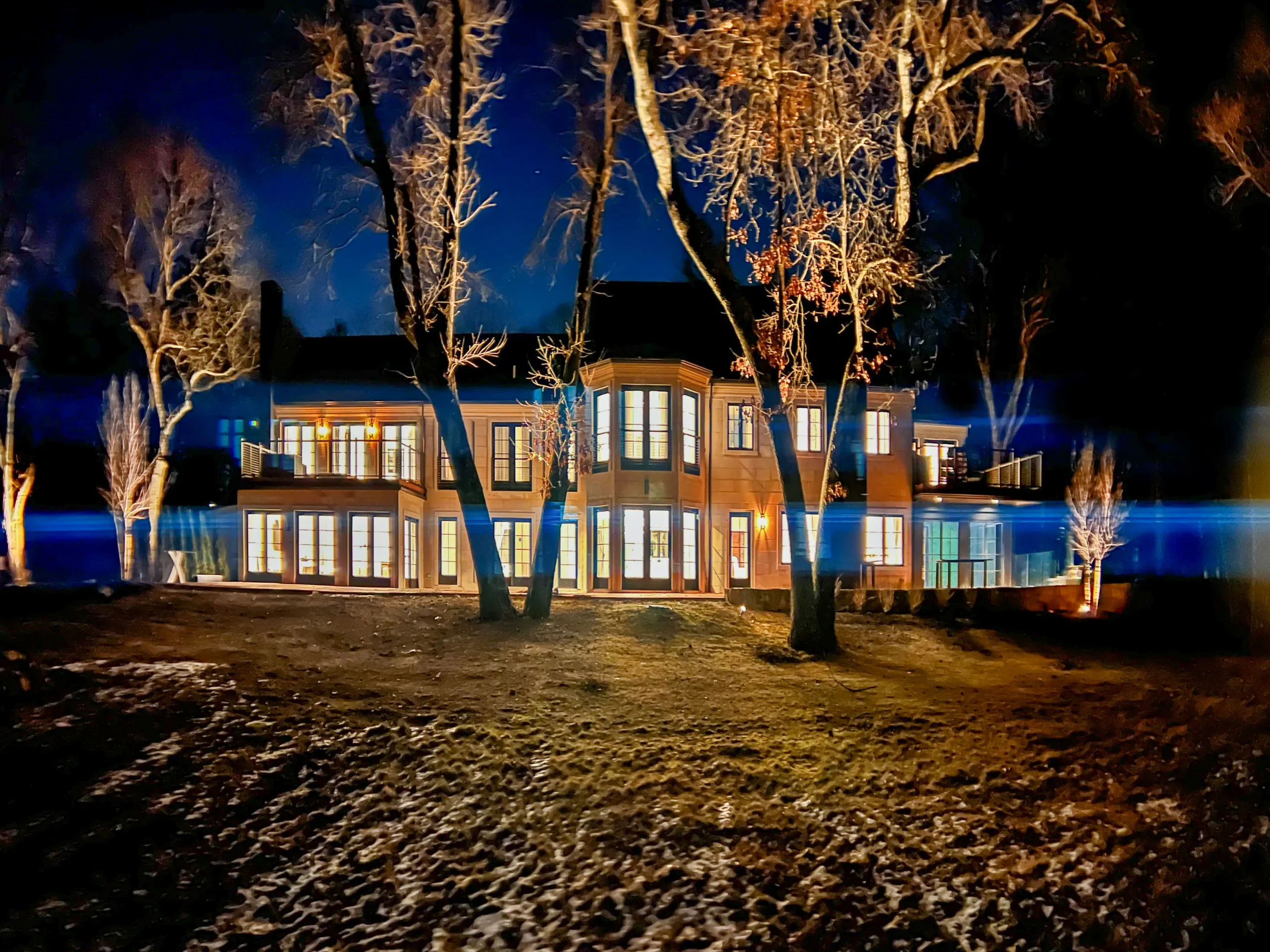
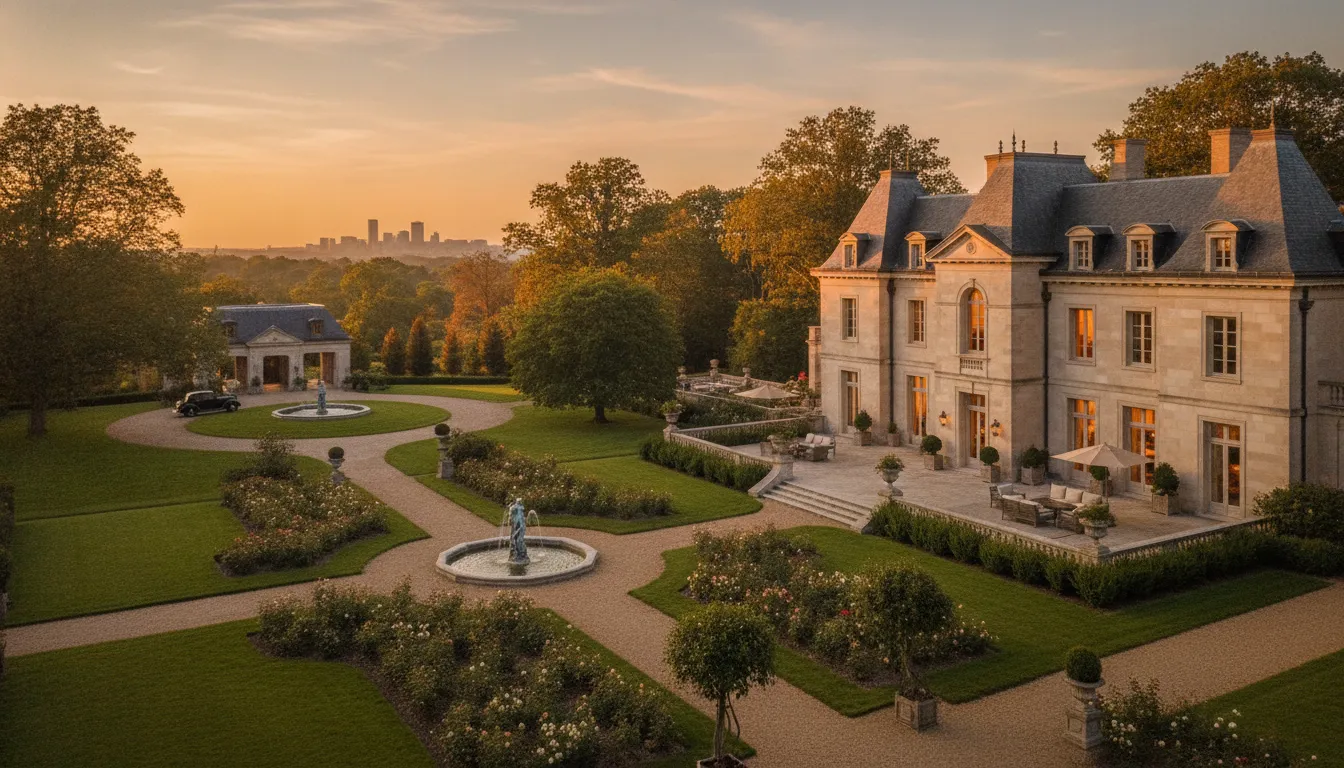
Thoughtful design gives a group choices without making the property feel institutional. The French Chateau-inspired estate includes 8,000 square feet of interior space, with a spa, billiards room, media area, private gym, kitchen, and multiple gathering spaces. Outside, 11 private acres include a 4,000-square-foot terrace, outdoor kitchen, fire pit, hot tub, lawn areas, and wooded edges.
That range supports flexible event flow. A leadership group can move from focused discussion to informal conversation, while a family gathering can balance shared meals with quieter corners and outdoor time. When comparing venues, look for that ability to accommodate work, social time, and individual retreat space without forcing every activity into one room.
Types of Estate Venues in Massachusetts: Public, Semi-Private, and Fully Private
Access model is one of the most consequential distinctions in a Massachusetts estate venues comparison. Two properties may both appear elegant in photographs, yet create very different experiences once guests arrive. Planners should ask who else can use the setting, how much control the group has over the schedule. And whether the venue supports a residential rhythm or a more formal event format.
Public access generally means the property welcomes visitors beyond one booked group. A historic site, museum, garden, or public hospitality setting may host several functions, tours, dining guests, or other visitors during the same day. This model can suit a ceremony, reception, or gathering where a defined event window matters more than complete control of the surroundings. It may also offer established event infrastructure, but planners should confirm arrival routes, guest circulation, sound limitations, and which areas are available for private use.
Semi-private access gives one group a designated room, suite, terrace, or event area while other guests or members may use the wider property. This can be an effective middle ground for a hosted dinner, board meeting, or celebration with a clear beginning and end. The planning question is not simply whether the room is private. It is whether nearby activity, shared amenities, service schedules, or another event could affect the guest experience. Clarify the boundaries before assuming the venue functions as an exclusive estate.
Fully private access places the group in control of the entire setting for the agreed stay or event period. At The Charles Chateau, the whole estate is rented as one unit, with no concurrent bookings and complete privacy for the group. Reservations are for active members and invited guests, rather than public booking. This model is particularly useful when a retreat, celebration, or wedding weekend needs unhurried movement between working sessions, meals, overnight rooms, and informal time.
| Criterion | Public | Semi-private | Fully private |
|---|---|---|---|
| Access | Other visitors may be present. | A designated area is reserved while shared areas remain active. | The entire estate is reserved for one group. |
| Privacy | Limited to the booked area and event window. | Moderate, depending on boundaries and adjacent activity. | Complete privacy with no concurrent bookings. |
| Flexibility | Usually follows a defined event schedule. | Flexible within the reserved spaces and stated hours. | Supports natural movement between work, social time, and overnight stays. |
| Best fit | Public-facing events and formal functions. | Focused meetings, dinners, and celebrations. | Private retreats, multiday gatherings, and exclusive estate stays. |
For a group that values discretion, residential comfort, and shared time, fully private access may be the more coherent format. The final decision should follow the event’s purpose, guest count, desired level of control, and need for integrated service. Ask how access is defined in writing, which spaces are included, and how the venue’s concierge team supports the booking from arrival through departure.
Comparing Estate Venues by Exclusivity and Access Model
Exclusivity affects more than the feeling of privacy. It determines how guests move through a property, when shared spaces are available, and how much control a planner has over the rhythm of a retreat or celebration. In a Massachusetts estate venues comparison, ask whether the group is reserving a defined event area, a set of rooms, or the entire estate.
Whole-estate rental creates a single environment for the group. At The Charles Chateau, the estate is rented as one unit, with no concurrent bookings. That means a leadership discussion can move from a formal gathering space to a quieter corner without intersecting with another party’s agenda. A family gathering can unfold at its own pace, with guests able to separate for morning coffee, conversation, or private time while remaining within the same setting.
Privacy changes the guest flow
When access is shared, planners often have to work around other guests, public circulation areas, or fixed schedules. A fully private estate offers a more natural sequence. Guests may gather indoors, continue outdoors, and return to the house without the experience feeling divided into separate venue zones. The Charles Chateau’s 8,000 square feet of interior space and 11 private acres support that movement. With multiple gathering spaces inside and lawns, wooded edges, and outdoor areas beyond the house.
This distinction is especially relevant for groups that need both togetherness and breathing room. The property includes a spa, billiards room, media area, private gym, kitchen, and other gathering spaces. Outdoors, a 4,000-square-foot terrace, outdoor kitchen, fire pit, hot tub, and lawn areas create additional options for informal conversation and evening use. These amenities do not replace a thoughtful agenda, but they can make transitions between structured and social time feel less forced.
Overnight use and concierge coordination
Access also shapes the overnight experience. Eight bedrooms provide space for 16 or more overnight guests, allowing an eligible group to stay in one residential setting rather than dispersing across separate accommodations. That continuity can simplify arrivals, meals, downtime, and the small decisions that otherwise fragment a multiday program.
Concierge coordination becomes more meaningful when the service is connected to the whole stay, not just an event window. A planner can consider the group’s arrival, room use, dining, gathering spaces, and transitions as one experience. The Charles Chateau’s members-only model serves active members and invited guests, with concierge-level support integrated into the booking and stay. For a closer look at how this access model works, explore full-estate exclusivity and evaluate whether complete control of the setting matches your group’s priorities.
What Sophisticated Planners Look for That General Guides Miss
A useful venue review goes well beyond appearance, guest capacity, and a convenient date. Experienced planners examine how naturally a property supports the day they are trying to create. Can a leadership group move from a focused discussion to an unhurried dinner without losing privacy? Can several generations spend time together while still finding quiet corners of their own? Does the venue reduce coordination work, or create more of it?
Operational ease. Start with the practical rhythm of the event. Consider arrival, parking, room setup, catering, audio-visual needs, transitions between activities, and the point of contact responsible for decisions. A private estate can be especially effective when the booking and stay are supported by an integrated concierge experience. Rather than treating service as an extra layer, sophisticated planners assess whether it helps the group move through the itinerary with calm and discretion.
Residential comfort. A polished setting should still feel comfortable after the formal agenda ends. The Charles Chateau includes 8,000 square feet of interior space, eight bedrooms, and room for 16 or more overnight guests. Its interior gathering spaces and amenities include a spa, billiards room, media area, private gym, kitchen, and multiple areas for conversation. Those details matter because executive groups and families do not experience a multiday gathering as one continuous meeting. They need places to regroup, relax, and connect at different levels of energy.
Indoor-outdoor flow. General guides often show outdoor features as decoration. A planner should ask whether the grounds genuinely extend the experience. Eleven private acres, lawn areas, wooded edges, and a 4,000-square-foot terrace create options for informal conversation, meals, and pauses between sessions. The private grounds and outdoor amenities include an outdoor kitchen, fire pit, and hot tub, allowing the setting to shift naturally from structured daytime work to more relaxed evening time.
Discretion and group fit. Whole-estate use means no concurrent bookings, which can make a meaningful difference for a board, senior leadership team, or family gathering. Privacy is not simply a visual quality. It affects how freely guests speak, how children and older relatives share space, and whether a group can follow its own pace. For a Massachusetts estate venues comparison, the strongest choice is therefore not necessarily the most elaborate property. It is the one whose access model, residential proportions, service, and setting align with the people attending.
How to Evaluate a Massachusetts Estate Venue for Your Specific Event
A useful venue decision begins with the event you are actually planning, not with a list of amenities. Whether the occasion is a leadership retreat, wedding weekend, milestone celebration, or multigenerational gathering, compare each property against the experience your guests need. Use this checklist to make a Massachusetts estate venues comparison that is practical as well as visually appealing.
- Define the purpose and the pace. Write down what the gathering must accomplish. A strategy retreat may need quiet rooms for focused conversation, while a celebration may depend on relaxed transitions between dining, conversation, and time outdoors. If the event combines work and social time, ask how the venue supports both without making either feel like an afterthought.
- Set the real group size. Separate the full guest count from the number who will stay overnight. Then ask about maximum capacities, sleeping arrangements, room setups, and whether the layout keeps the group connected without feeling crowded. For an estate with overnight use, confirm which bedrooms are available, how guests move through the property. And whether the accommodation model suits the event rather than simply increasing the room count.
- Understand the access model. Determine whether the property is shared with other guests, reserved for one group, or available only through a membership and invitation structure. Ask who may be on site during the event, whether there are concurrent bookings, and what privacy means in practice. At The Charles Chateau, reservations are for active members and invited guests, and the whole estate is rented as one unit. Review the member access and booking process so the expectations are clear before you inquire.
- Evaluate location alongside privacy. A secluded setting is valuable only if it remains workable for your guests and suppliers. Confirm the drive from the airport, office, or city center, as well as arrival logistics, parking, and transfer needs. The Charles Chateau is approximately 20 minutes from downtown Boston, a useful consideration for groups that want a private setting without a distant destination.
- Ask how service is delivered. Identify the primary contact, the booking support available, and who coordinates the details of the stay. Discuss catering, audio-visual needs, rentals, entertainment, room setup, and any outside vendors. Concierge should be part of the planning and guest experience, not an undefined add-on. Ask what can be arranged before arrival and who remains responsible for decisions during the event.
- Walk through the indoor-outdoor flow. Review the actual sequence of arrival, gathering, dining, retreat, and evening time. Look for spaces that support different energy levels, including quieter corners and natural gathering areas. Ask how the venue functions if weather changes, whether indoor and outdoor areas are close enough for easy movement, and how the layout supports privacy between simultaneous activities.
- Request a written fit assessment. Before selecting a date, provide the point of contact, attendee count, preferred dates, room setup, catering approach, audio-visual requirements, and event schedule. Ask the venue to confirm availability, recommended floor plan, access terms, service scope, and next steps in writing. A thoughtful response will show whether the property understands your event, not merely whether it has an open date.
Frequently Asked Questions
What should planners compare when reviewing Massachusetts estate venues?
Start with the elements that shape the guest experience: privacy, access from Boston, overnight capacity. Service model, interior and exterior flow, and how easily the property supports both shared and quiet time. Confirm room layouts, event logistics, vendor coordination, and whether your group has exclusive use of the estate.
What is the best wedding venue in Massachusetts?
The best venue depends on the celebration’s size, style, guest journey, and desired level of privacy. A private estate may suit a wedding weekend when guests value residential comfort, overnight accommodation, and time together across several spaces. A hotel or dedicated event venue may be a better fit for a larger guest list or a more formal production.
Are estate weddings cheaper than traditional venues?
Not necessarily. The meaningful comparison is what each venue includes and how well its format fits the event. Consider exclusivity, accommodation, service, catering requirements, rentals, setup, and transportation rather than comparing a single headline figure. Estate venue pricing is typically shaped by the scope, dates, guest count, and services requested.
How do I evaluate whether an estate can accommodate my group?
Ask for the maximum overnight capacity, usable gathering areas, room setups, accessibility details, and indoor-outdoor options. Then review the full event flow, including arrival, meals, meetings, celebrations, quiet hours, and departure. A planning conversation should also clarify availability, point of contact, vendors, audiovisual needs, and the level of concierge coordination available.
Submit a Concierge Inquiry
A considered conversation can help clarify whether the estate’s setting, privacy, and flow suit your group’s plans. For venue fit, availability, and a private estate experience near Boston, submit a concierge inquiry. The team can learn what you are planning and guide the next step with the discretion and care expected of a private estate experience.