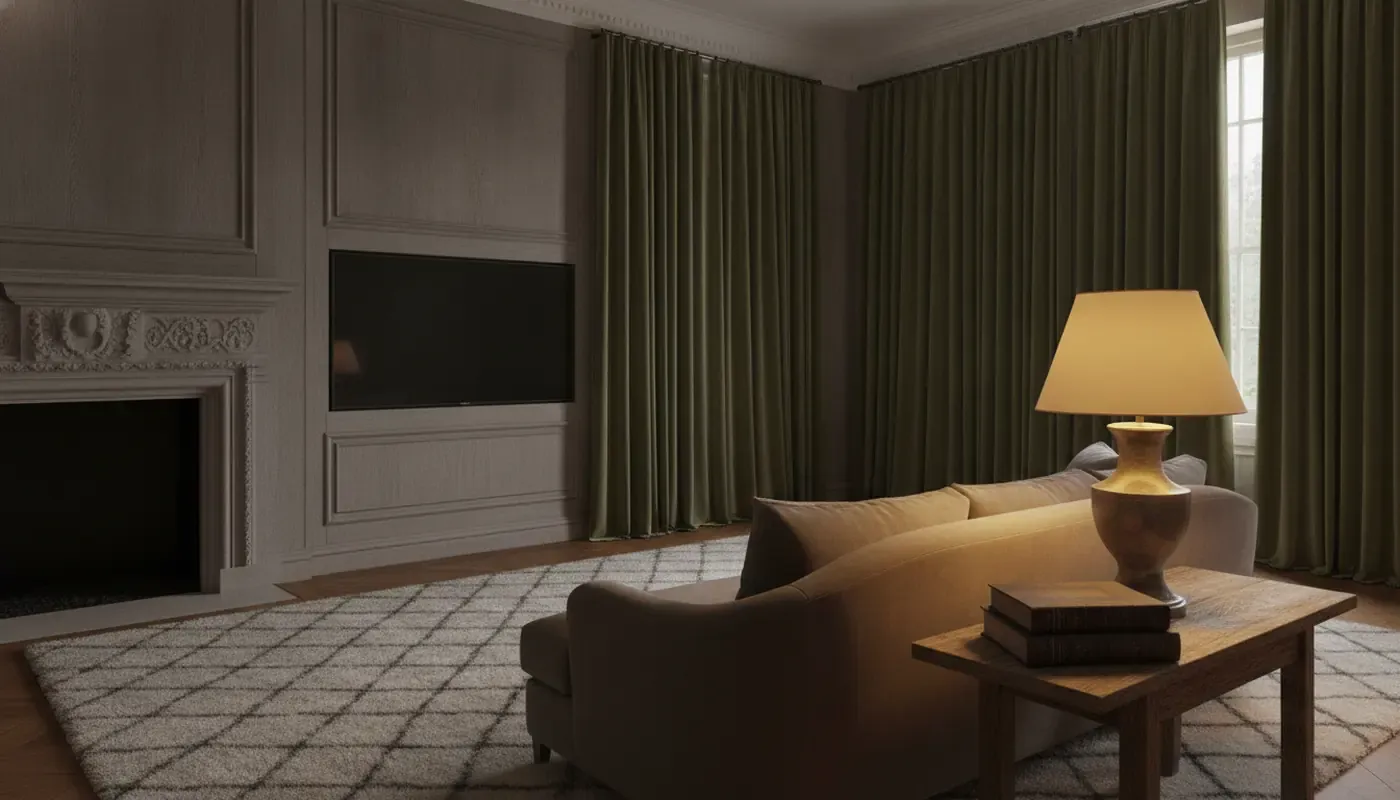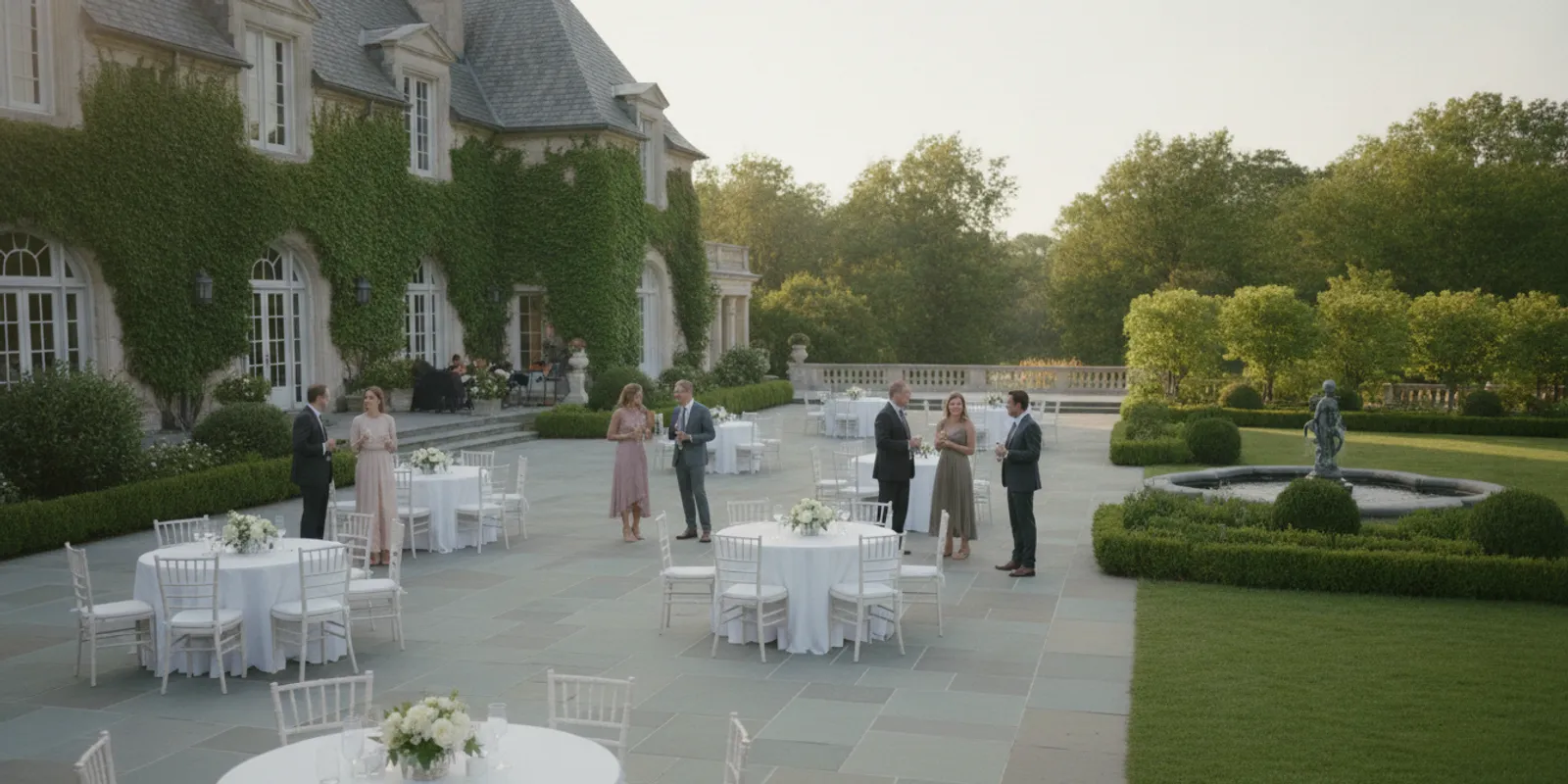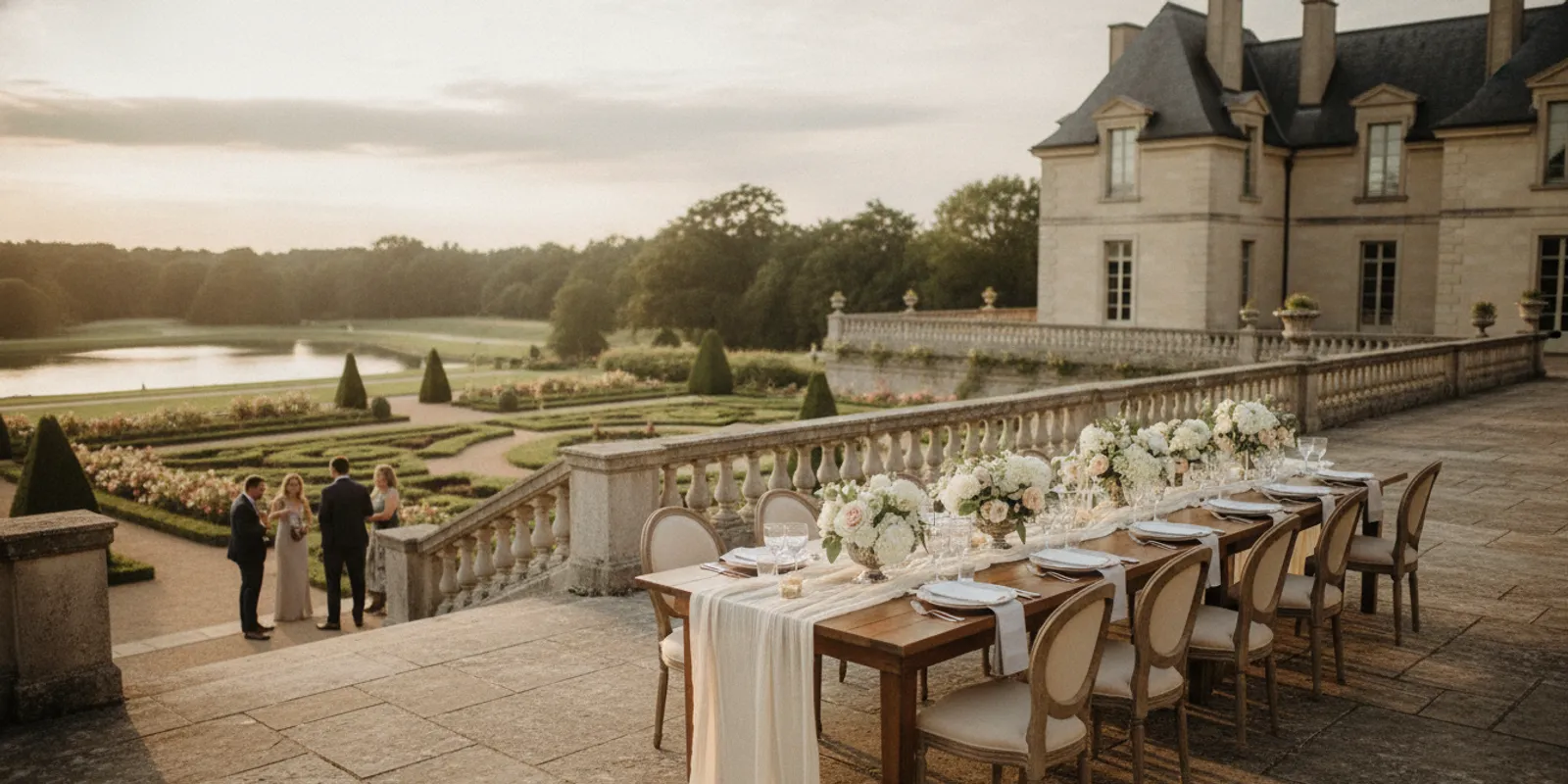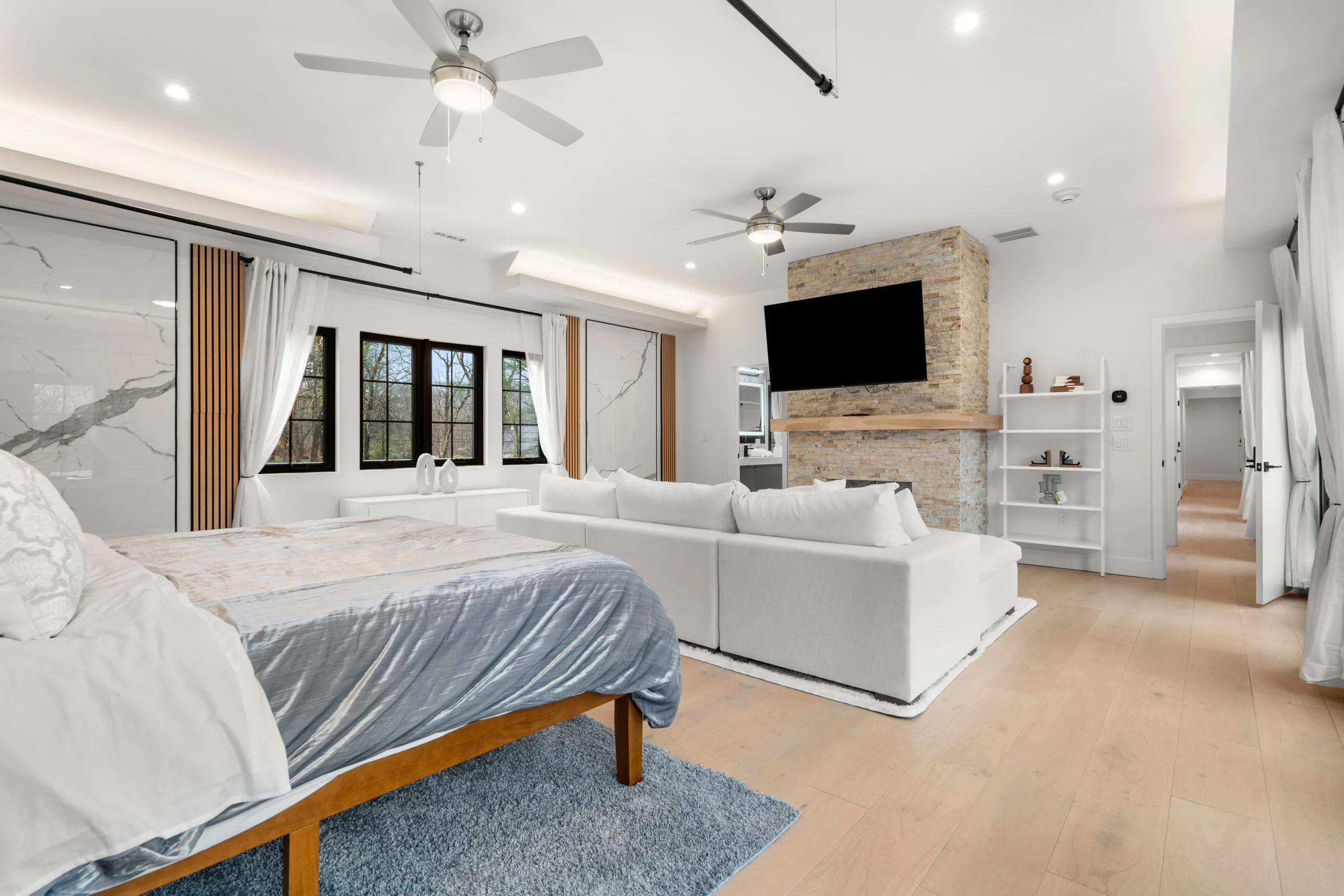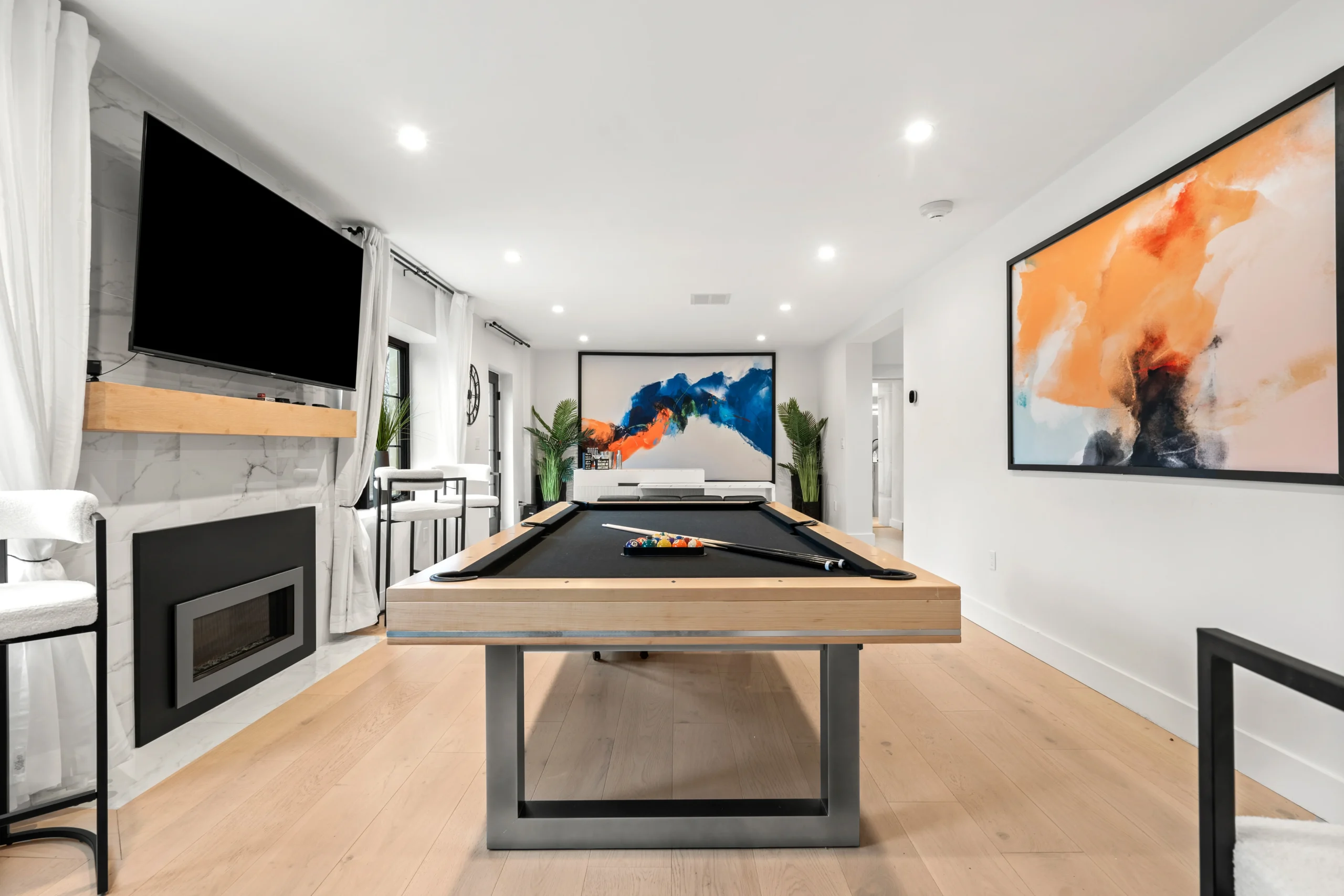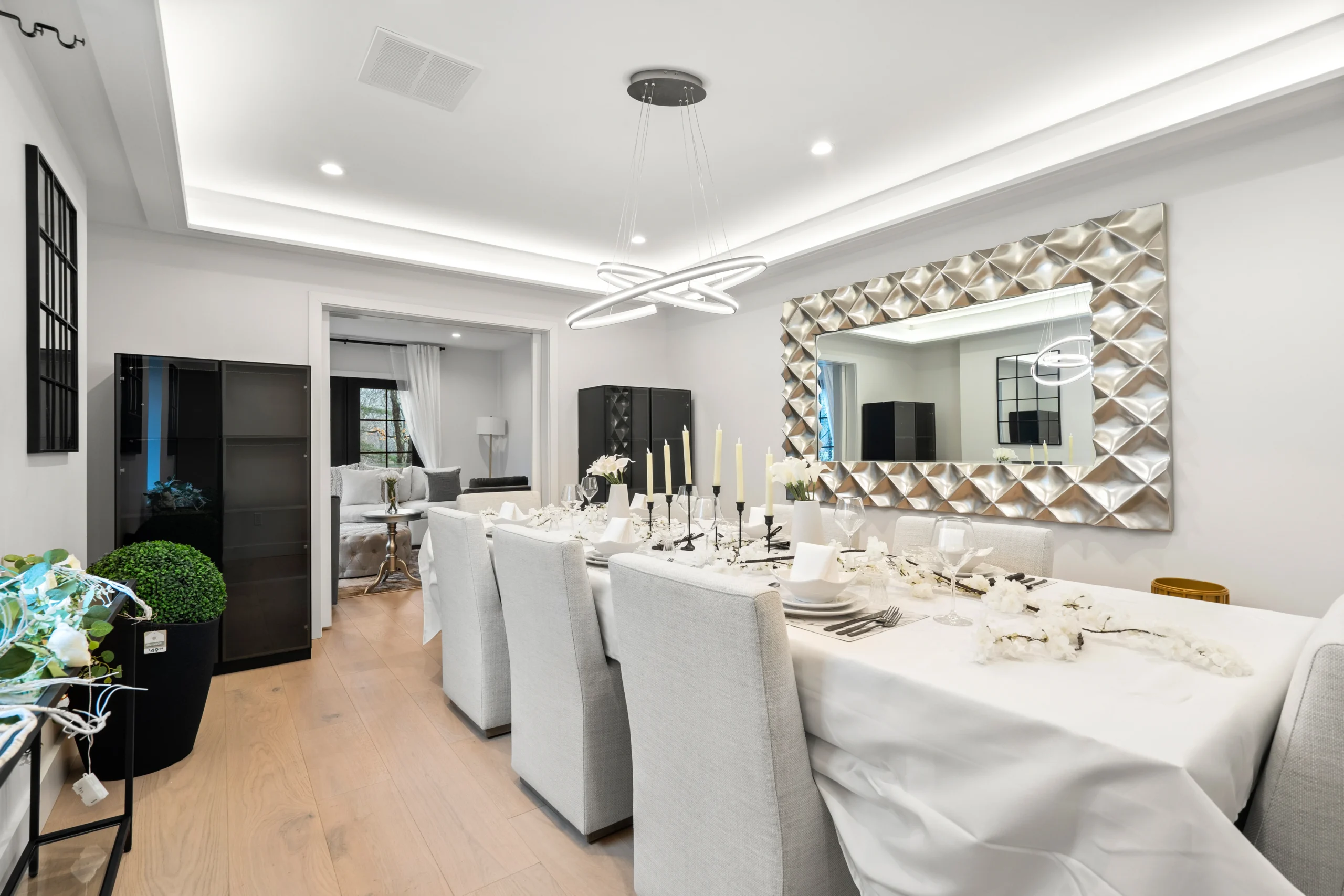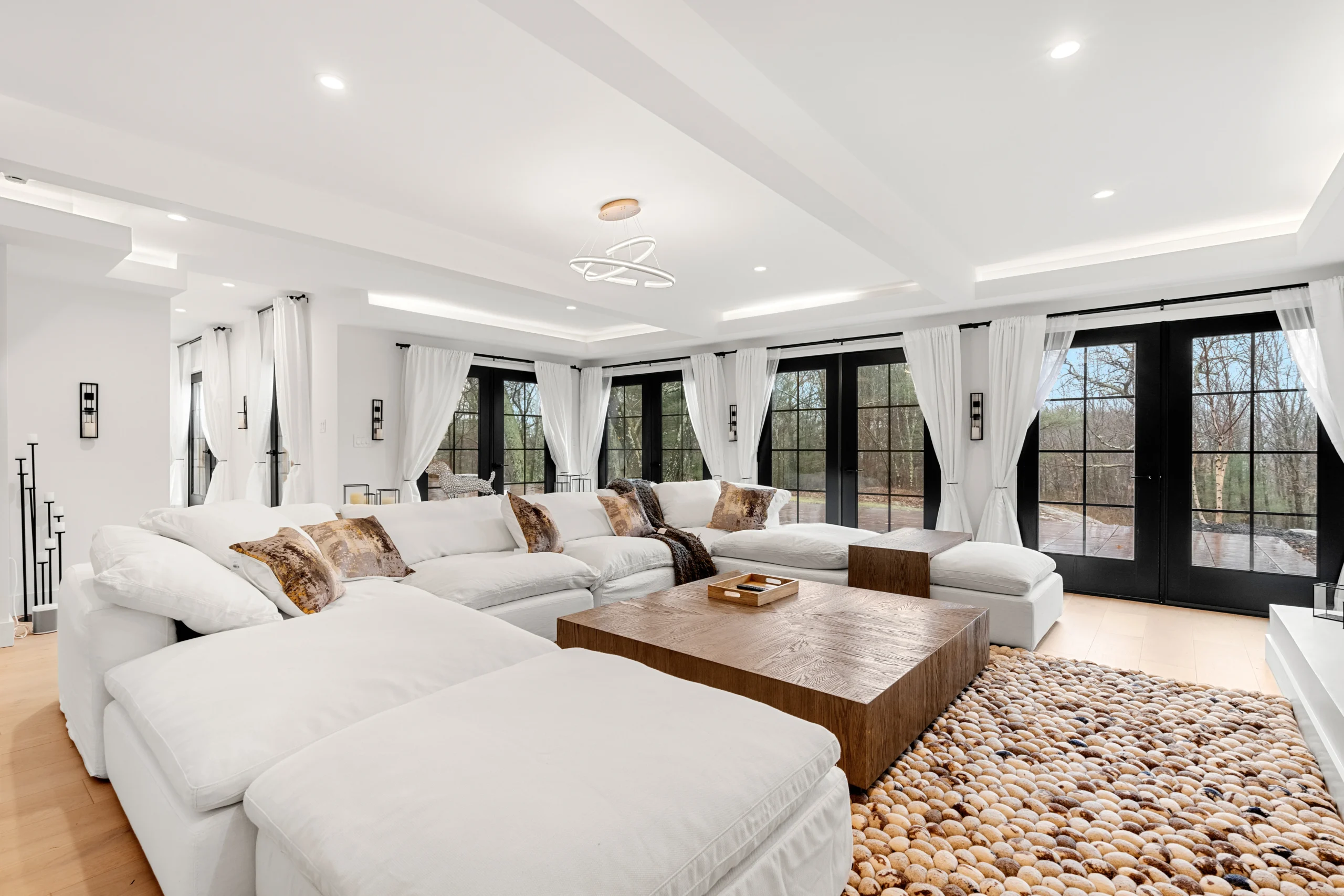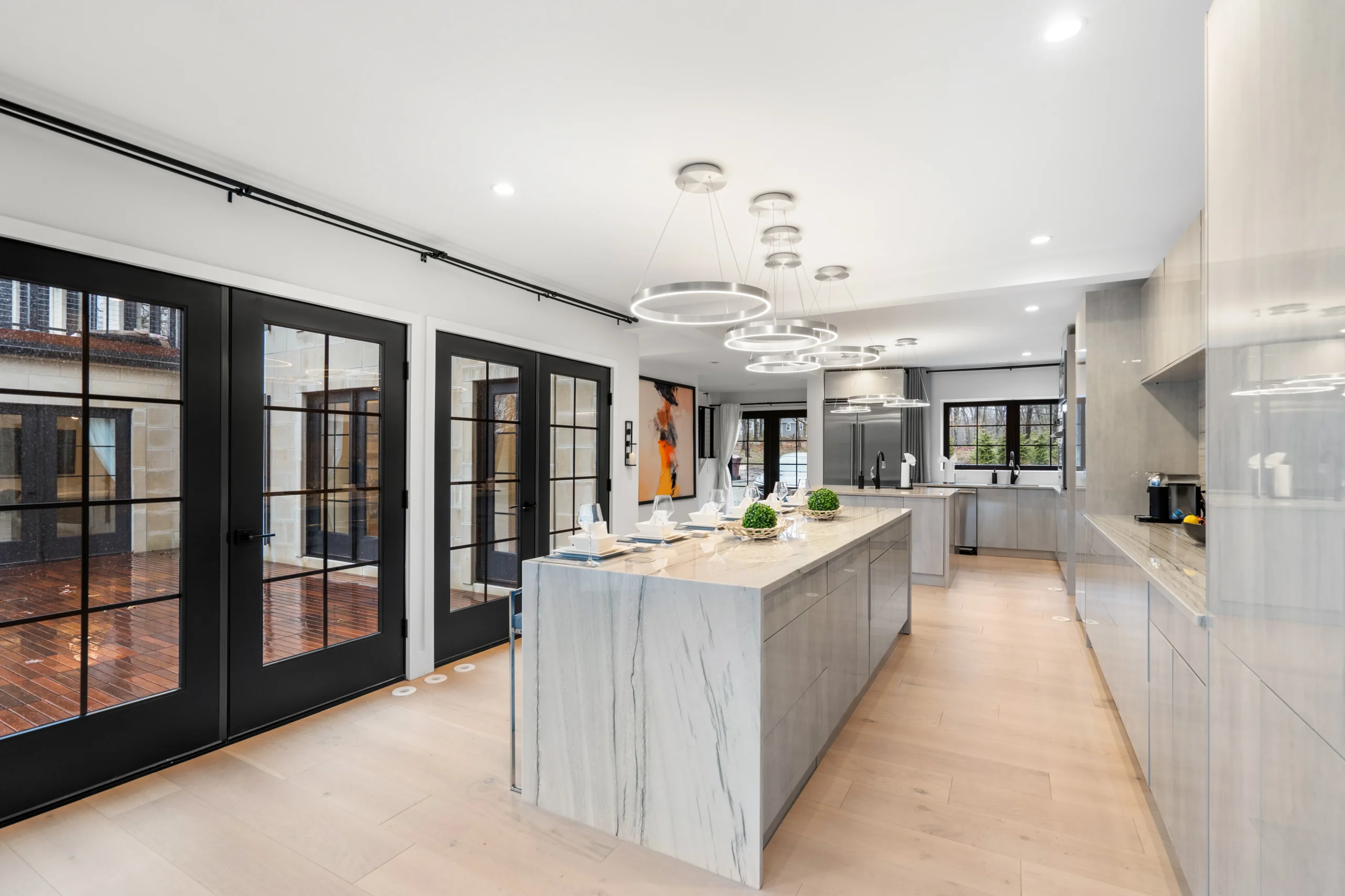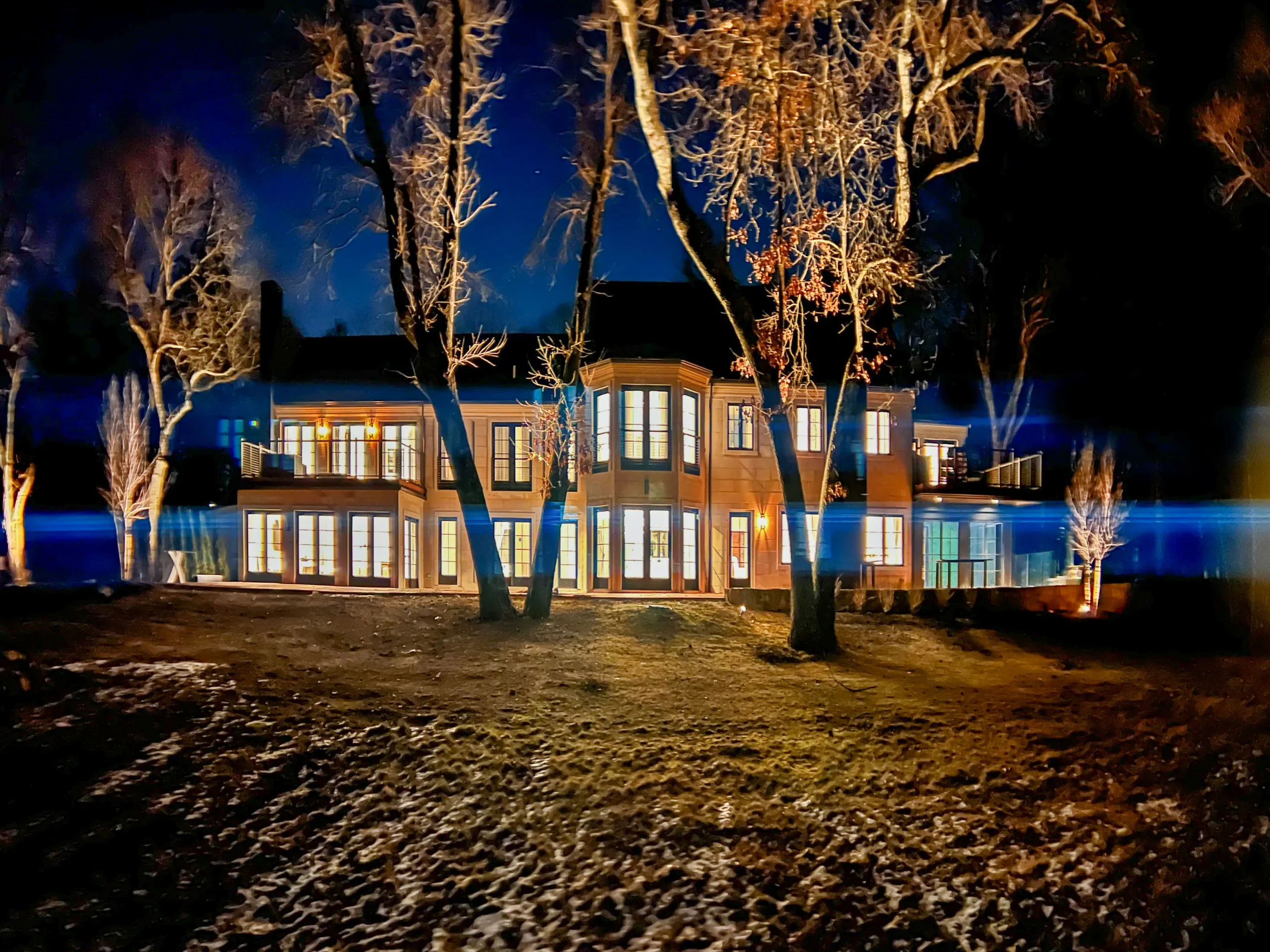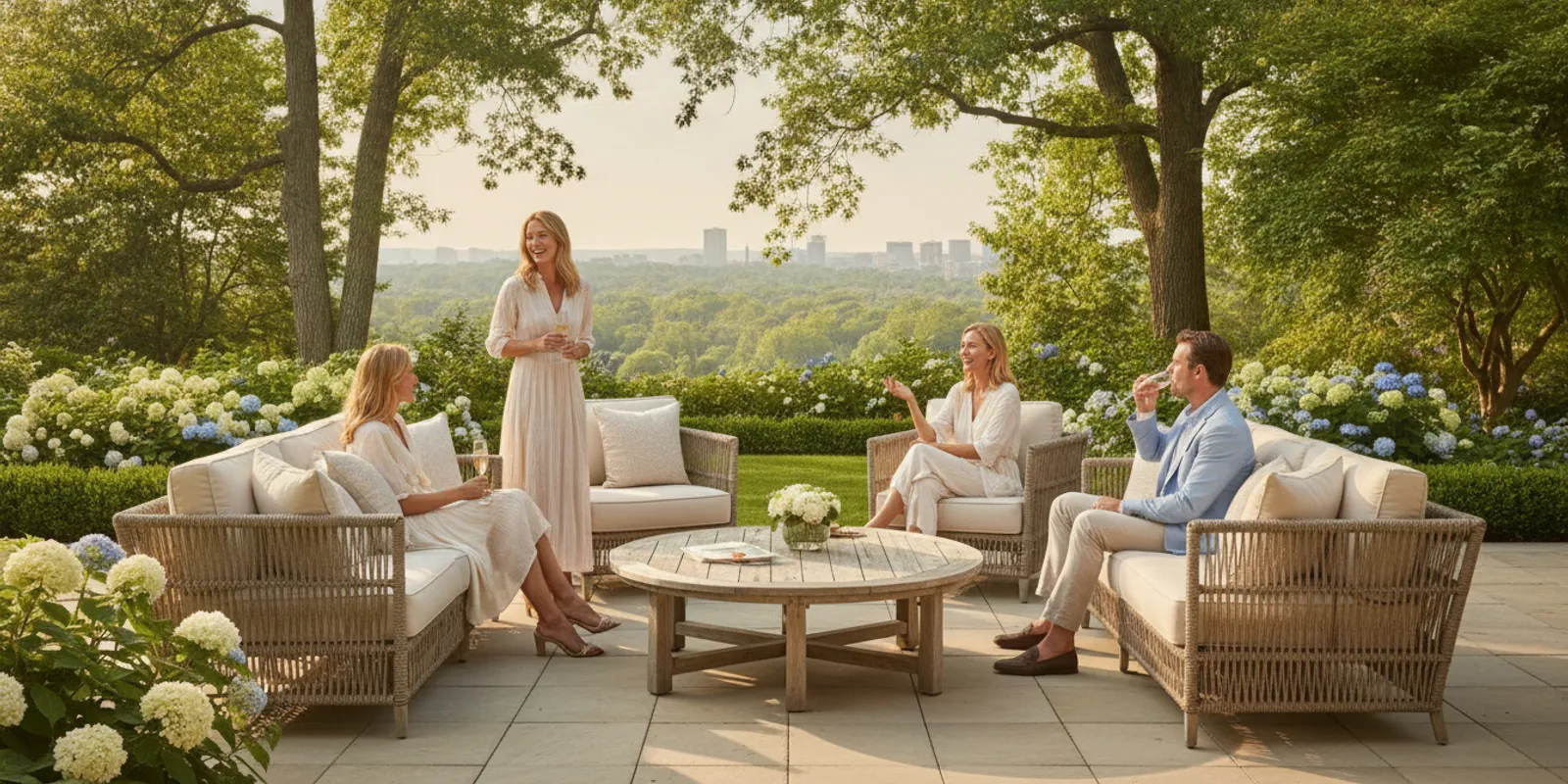
Luxury outdoor living spaces do more than add an attractive backdrop. For a leadership retreat, family gathering, or celebration weekend, they give guests room to step outside, talk in smaller circles, share a meal, or pause between planned moments. At a private estate near Boston, the grounds can shape the rhythm of the entire stay. Request availability to discuss how your group might use the estate’s indoor and outdoor spaces.
Request availability for your group
What makes outdoor living feel considered rather than decorative?
Well-planned outdoor living starts with how people will use the space, not with a list of furnishings. Give each area a clear purpose, make movement between inside and outside intuitive, and leave room for guests to choose between conversation, fresh air, and quiet. The result feels composed without asking the group to follow a rigid plan.
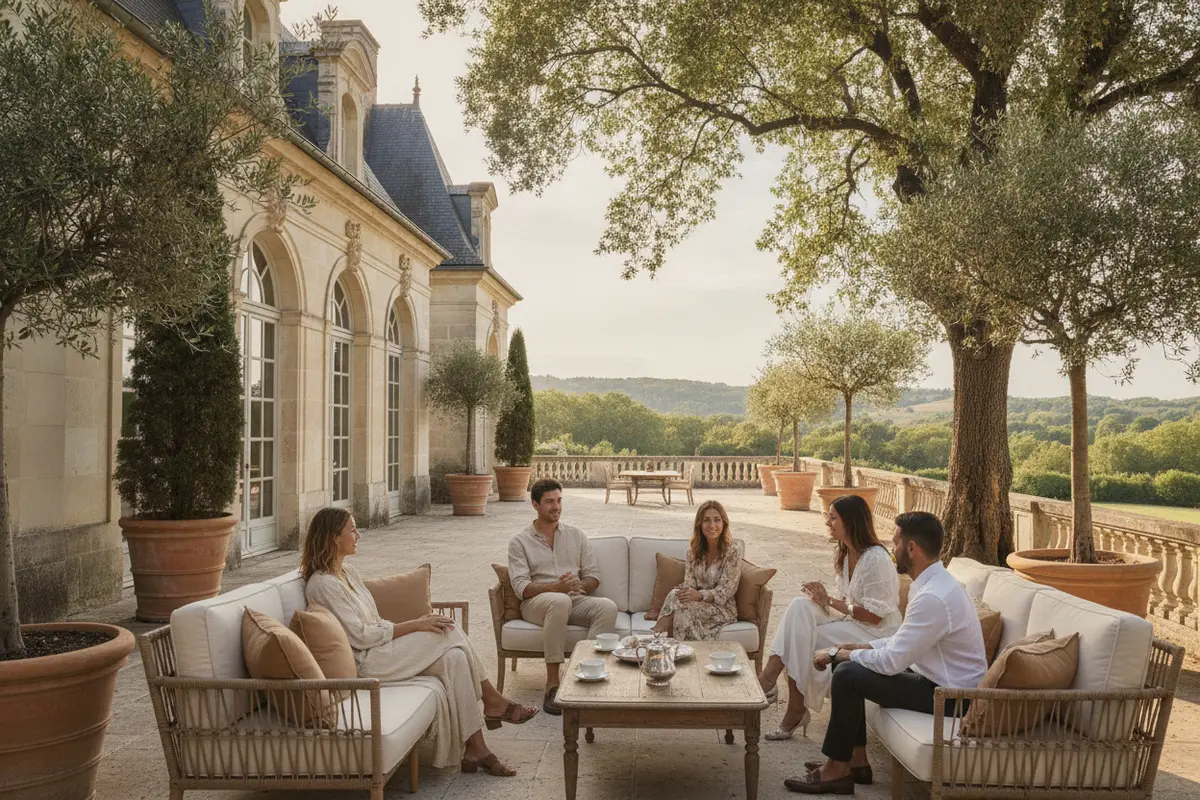
A generous terrace may serve several roles over a day. It can be a place for an early coffee, a break between working sessions, an informal meal, or a pause after an event. The key is not to assign every minute to the outdoors. It is to make stepping outside feel like an easy option rather than a separate activity requiring coordination.
Begin by describing the experience you want in simple terms. A leadership team may value discreet conversations and a change of setting between discussions. A family gathering may need areas where different generations can talk together, while also allowing a few guests to enjoy a quieter moment. A celebration may benefit from a natural transition from arrival to gathering to a relaxed close.
Then consider the character of the grounds. Mature landscaping, open air, and distance from nearby activity can create a sense of retreat even when the property is close to a city. The Charles Chateau is an 8,000 square foot French Chateau-inspired private estate on 11 private acres in Dedham, approximately 20 minutes from downtown Boston. Learn about the estate’s exterior spaces as you picture the way your guests might move through them.
How can outdoor spaces support different kinds of group time?
Outdoor areas work best when they support more than one social rhythm. A shared setting can bring everyone together, while nearby places to sit or walk allow conversations to become smaller and more personal. For a multi-day stay, that variety lets guests reconnect naturally without requiring a formal activity at every turn.
For an executive retreat, an outdoor pause can create breathing room between focused sessions. It may help a team reset, continue a conversation informally, or simply step away from a screen. The outdoor area should complement the meeting plan, not compete with it. Plan where the group will gather, how long the pause may last, and what indoor space remains available if the weather changes.
For a family celebration, the grounds can make it easier for relatives to find their own pace. Some may linger together on the terrace; others may prefer a more peaceful corner. The value is not a prescribed program, but the option to share time without everyone needing to do the same thing. For a longer visit, consider how indoor gathering spaces complement this flexibility; the estate’s interior offers another setting for guests to gather.
For a wedding weekend or milestone occasion, outdoor areas can provide a graceful change of scene across the day. They may welcome guests before a meal, offer a place for informal conversation, or extend the feeling of a gathering after the main event. Keep the planned sequence clear, while leaving some unscheduled time for the moments that happen on their own.
How should you plan the flow between indoors and outdoors?
Plan indoor-outdoor flow by mapping the experience in order: arrival, shared time, meals or work, open pauses, and evening. Identify where guests naturally move at each point and where a transition could feel crowded or unclear. A thoughtful sequence helps the outdoor setting feel part of the stay, rather than an isolated feature.
Start with the moments that matter most to your group. For a corporate gathering, note when the group needs privacy for discussion and when an informal break would be useful. For a multi-generational visit, think about when everyone is likely to gather and when guests may want a quieter alternative. For a celebration, plan the path between welcoming guests, gathering, dining, and winding down.
Next, separate essential needs from preferences. A private conversation, a meal, and a brief outdoor pause may all be important. A particular decor theme or tightly timed outdoor program may be optional. This distinction keeps the plan adaptable and helps the concierge team understand what to prioritize. If the stay spans more than one day, vary the pace instead of repeating the same schedule.
Finally, consider the indoor counterpart to each outdoor moment. If weather or temperature changes, the group should know where the next part of the gathering can continue. This is especially useful when an outdoor meal or activity is central to the occasion. Discuss the intended flow during inquiry, and review the concierge experience as part of shaping the stay.
Use the following comparison as a planning prompt. It is not a fixed layout or a promise that every use is appropriate for every reservation; arrangements depend on the group and should be discussed in advance.
| Outdoor use | What it can add | What to plan |
|---|---|---|
| Terrace conversation | An informal place to reconnect or continue a discussion | Group size, timing, privacy needs, and an indoor alternative |
| Outdoor dining | A change of setting for a shared meal | Service approach, weather contingency, and tailored seating arrangements |
| Open-air pause | A quieter interval between planned moments | Duration, accessibility needs, and a clear return to the program |
| Evening gathering | A gentle transition from the day’s activities | Lighting, sound considerations, timing, and the group’s preferred atmosphere |
What should planners confirm before choosing a private estate?
Before choosing an estate for a group, confirm the property’s capacity, access model, available spaces, and how planning support is handled. These details help a decision-maker understand whether the setting fits the actual occasion, rather than relying on photographs or a broad description. Confirm expectations early, especially when the group has firm dates or a multi-part program.
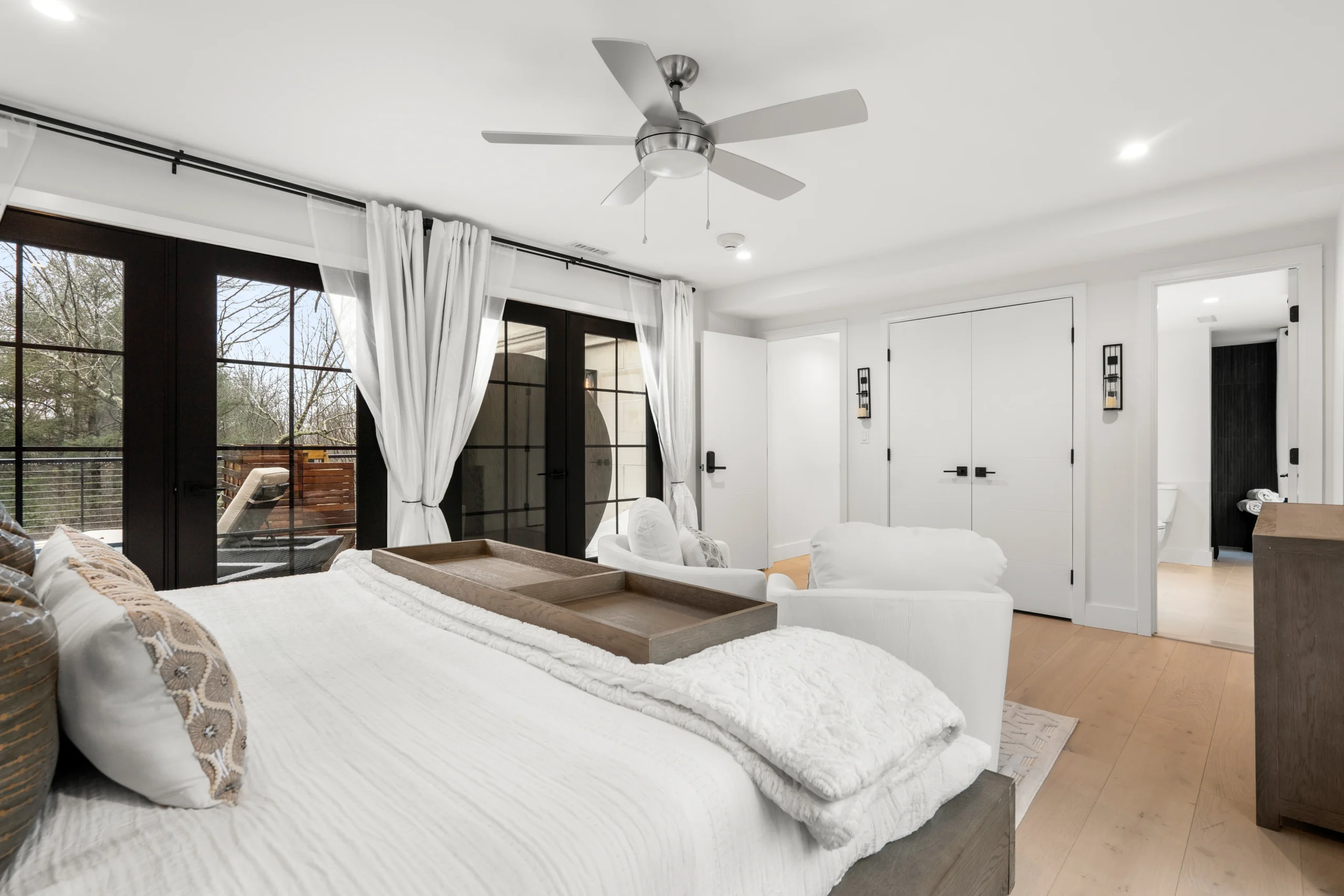
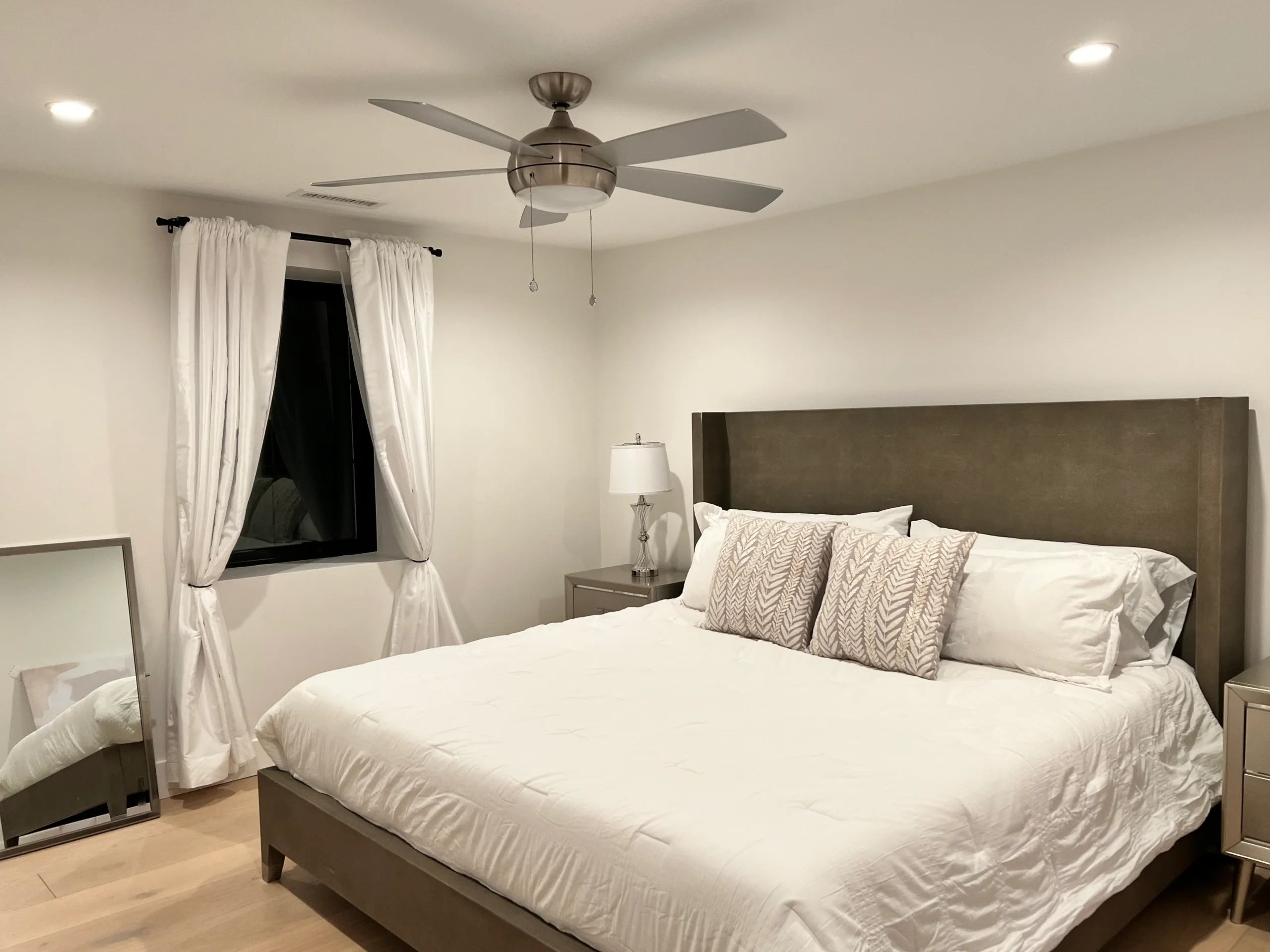
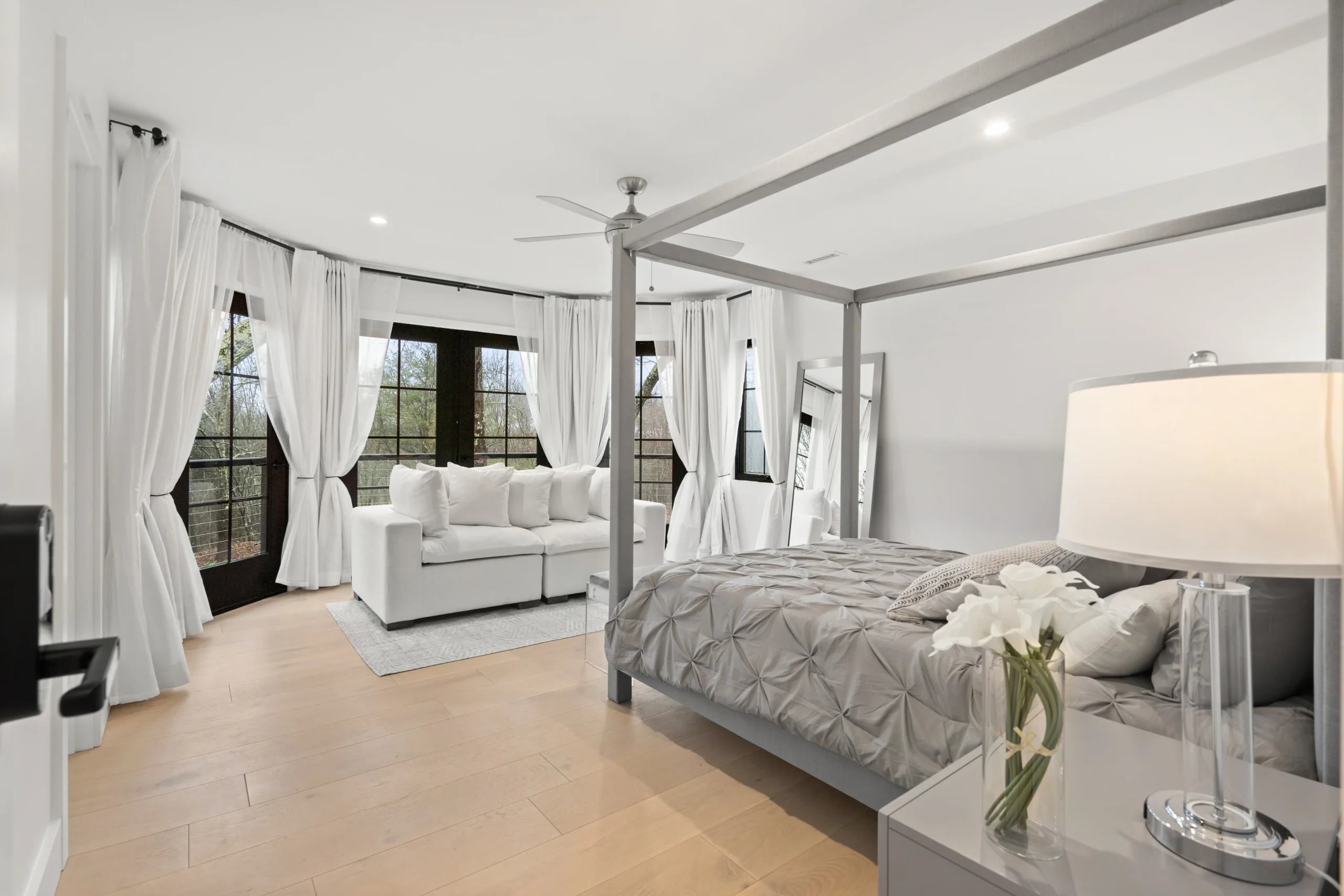
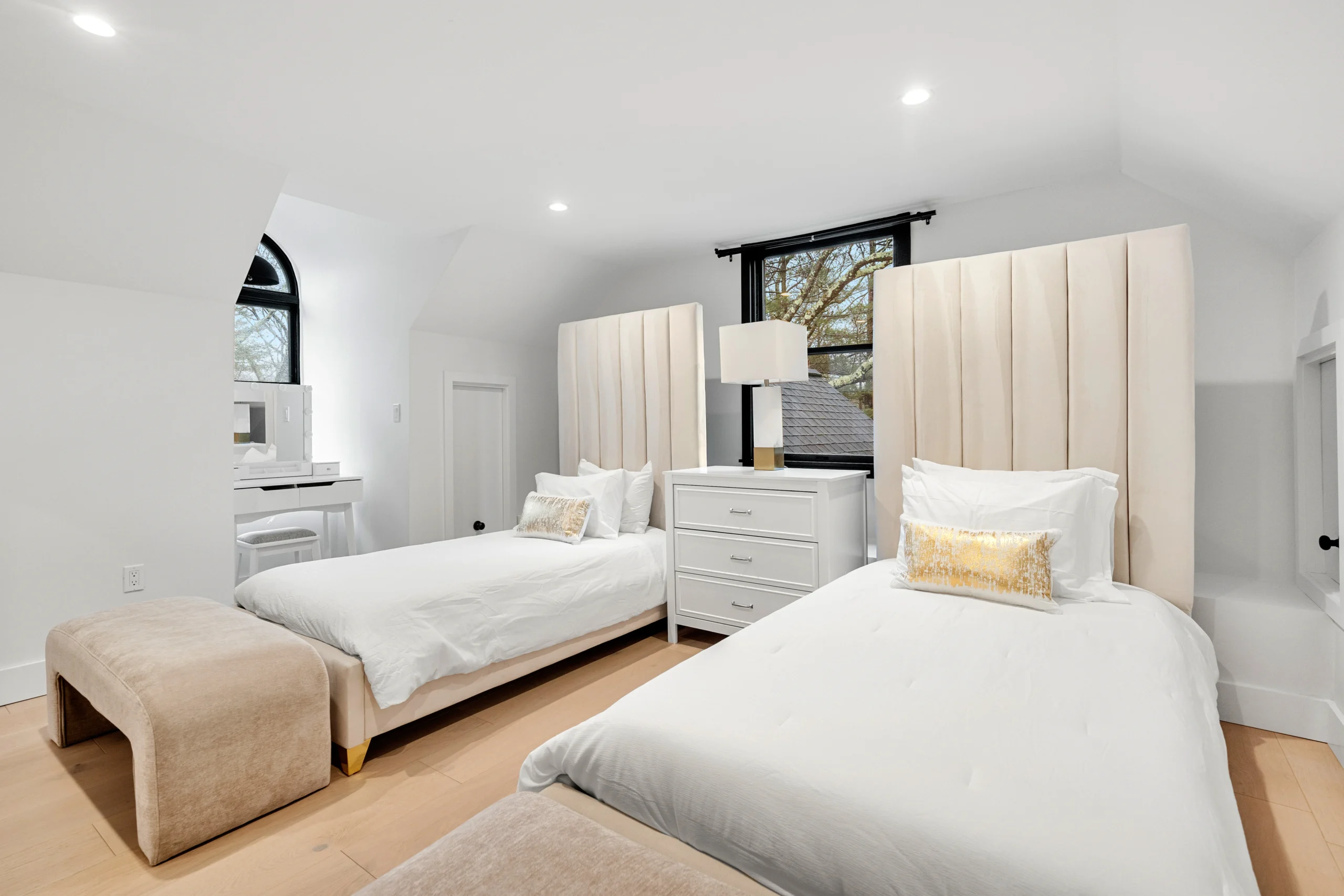
For overnight stays, match the group to the accommodation rather than focusing only on the outdoor grounds. The Charles Chateau has eight bedrooms and can accommodate 16+ overnight guests. Consider who is staying, whether guests may need different sleeping arrangements, and how arrival and departure will work. The suite information can help you review the accommodation alongside your outdoor plans.
Clarify whether the event includes day guests as well as overnight guests. The estate can host up to 30 day guests for gatherings, with parking for 10+ vehicles. If people will arrive at different times, discuss how arrivals, access, and transitions should be coordinated. Do not assume that a room or outdoor area is open to unlimited use; confirm the intended plan with the concierge team.
Also ask how access works. The Charles Chateau is a private membership estate, not a public venue or a standard hotel. Reservations are extended to active members and invited guests, and prospective guests request consideration for membership. Review the private estate experience so the group’s organizer understands the next step.
For ideas about matching a private setting to a specific occasion, see the guide to private retreats and events near Boston. It is useful to bring a clear description of the purpose, anticipated attendance, preferred dates, and the balance of structured and open time when you begin the conversation.
How do privacy and location shape the outdoor experience?
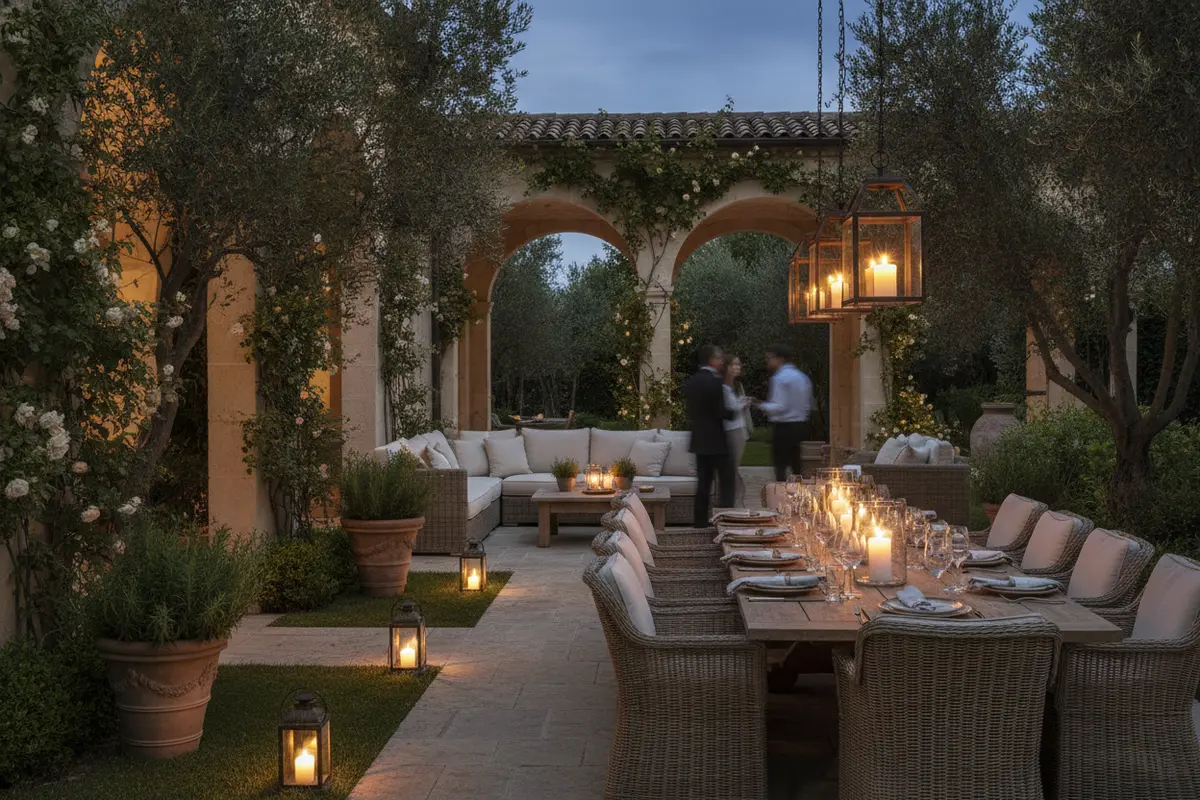
Privacy shapes whether outdoor time feels restorative or exposed, while location shapes how easily guests can reach the retreat. A private estate close to Boston offers a different balance from a destination that requires a long drive: the group can step away from its usual setting without making travel itself the main event.
For leadership teams, discretion may matter as much as scenery. A private setting supports a more contained gathering, while a residential environment can feel less formal than an institutional meeting venue. The organizer should still identify any specific privacy expectations and discuss them before the stay, rather than assuming that a particular arrangement is included.
For families and celebration groups, privacy helps the occasion feel personal. Guests can spend time together without the constant turnover of unrelated visitors associated with shared public spaces. The Charles Chateau is reserved as a whole-property experience, with no concurrent bookings. This allows one group to settle into the estate’s spaces and establish its own pace.
Location also affects the mood of the gathering. The estate is in Dedham, on 11 private acres, approximately 20 minutes from downtown Boston. That proximity can simplify arrival for guests coming from the city while preserving a sense of separation once they are on the grounds. Read more about the surrounding neighborhood when considering travel and local plans.
Think of outdoor living as one part of the setting, not the entire itinerary. Some groups will spend much of their time inside; others may use the terrace or grounds for several transitions during the day. The most successful plan respects the group’s purpose and avoids forcing a single version of luxury on everyone.
What practical details make an outdoor gathering feel effortless?
An outdoor gathering feels effortless when the organizer has surfaced practical needs before arrival. Discuss the timing, the number and role of guests, the desired atmosphere, and any accessibility or dietary considerations with the concierge team. Specific arrangements are tailored to each reservation, so a clear inquiry is more useful than assuming fixed seating or dining capacities.
Think through the day from a guest’s point of view. Where will people arrive? How will they know where to gather? Is there a natural place to pause before moving to the next part of the program? Small details such as these reduce uncertainty and let guests focus on one another.
For meals, distinguish the feeling you want from the exact service plan. A relaxed outdoor meal, a formal celebration, and a working lunch have different needs. Share the occasion, preferred timing, and any known requirements, then allow the concierge team to discuss what can be arranged. Do not treat a photograph or sample layout as a guarantee of a particular set-up.
Weather is another planning variable. Decide what aspects of the outdoor plan are essential and which can shift indoors. Make a simple alternative for any moment that depends on being outside, and tell guests how the plan may change. This avoids last-minute confusion while preserving a calm tone if conditions shift.
Finally, allow a little unclaimed time. A beautifully planned group stay does not need to fill every hour. An open interval on the terrace or a quiet pause between activities can become the part guests remember most. The multi-day celebration weekend guide offers a related planning perspective for groups bringing several moments together.
How can you shape an outdoor plan around your group’s purpose?
Build the outdoor plan around the reason everyone is gathering. A team retreat needs focus and useful pauses; a family reunion needs shared time and room for different preferences; a celebration needs a sense of occasion without making every hour feel staged. Define the purpose first, then let the setting support it.
For an executive team, write down the decisions or conversations that must happen. Decide which sessions need a more formal indoor setting and where an outdoor break could help the group change pace. Keep the session plan realistic, and protect time for informal exchange. The guide to planning a corporate retreat can help you develop the wider program.
For a family gathering, start by identifying the moments that matter across generations. A shared meal or toast may be the center of the visit; other time can remain flexible. Ask the organizer to gather preferences early, especially when guests have different schedules or needs. See the guide to multi-generational family gatherings for more ways to plan a stay that makes space for different rhythms.
For a milestone celebration or wedding weekend, think in sequences rather than isolated events. The outdoor setting may be a welcome point, a place for conversation between formal moments, or a relaxed close to the day. Share the likely schedule, guest mix, and any vendor or coordination questions during the inquiry, so the planning conversation can address the full experience.
Whichever the occasion, the group should feel that the estate belongs to the rhythm of its stay. Keep the essentials clear and leave room for natural connection. For an overview of the property and its point of view, visit the story behind The Charles Chateau.
Frequently asked questions
Luxury outdoor living spaces are most useful when they fit the purpose of the stay, support natural movement, and offer a thoughtful alternative to indoor time. These answers address common questions about planning a private group experience near Boston, including capacity, weather, and how to begin an inquiry.
What are luxury outdoor living spaces for a group stay?
They are outdoor areas designed to support the group’s experience, such as conversation, dining, open-air breaks, or transitions between planned moments. The important measure is how the space contributes to the stay, not how many features it has.
Can an outdoor area be arranged for a particular group?
Specific arrangements are discussed with the concierge team and tailored to the reservation. Share the occasion, approximate attendance, preferred timing, and any needs during the inquiry. Seating and dining arrangements are not published as fixed capacity figures.
How many guests can stay overnight or attend a gathering?
The estate has eight bedrooms for up to 16+ overnight guests and can host up to 30 day guests for gatherings. Discuss the actual guest list and planned use with the concierge team, since suitability depends on the details of the occasion.
What happens if the weather changes?
Plan an indoor alternative for any essential outdoor moment and discuss the intended flow in advance. The group can then adjust the plan if conditions change, rather than relying on every activity taking place outside.
How do we inquire about a stay?
Prospective guests can request consideration for membership and share their occasion, preferred dates, group size, and priorities with the concierge team. Reservations are extended to active members and invited guests; they are not made through public instant booking.
Request consideration for membership
A considered outdoor plan leaves room for the group to gather, breathe, and find its own pace within a private estate experience near Boston.